In the DIHK Newsroom, you’ll find the latest press releases, statements, studies, and background information on the German economy—presented in a concise, well-organized, and always up-to-date...
Business tax has become a silent brake on location development, as shown by the survey on municipal rates 2026 conducted by the German Chamber of Commerce and Industry (DIHK). The rising burdens on businesses are also due to the strained financial situation of many municipalities. The DIHK...
Loss of industrial jobs, record insolvencies, years of stagnation: The pressure on Germany as a business location is mounting. The reform announcements by the Chancellor cautiously inspire optimism within the German Chamber of Commerce and Industry (DIHK). However, DIHK President Peter Adrian...
EU and Canada: Elevating the Partnership to a New Level
Trade, resources, energy, digitalisation: Strengthening the partnership with Canada has much to offer for the EU. The German Chamber of Commerce and Industry (DIHK) highlights specific areas where both sides should take concrete action to enable companies in Germany to benefit from new economic...
Since 12 August, the EU-wide Packaging and Packaging Waste Regulation (PPWR) is in effect. It aims to reduce waste and enhance material recycling. However, the implementation of these fundamentally correct objectives presents enormous challenges for businesses, accompanied by significant...
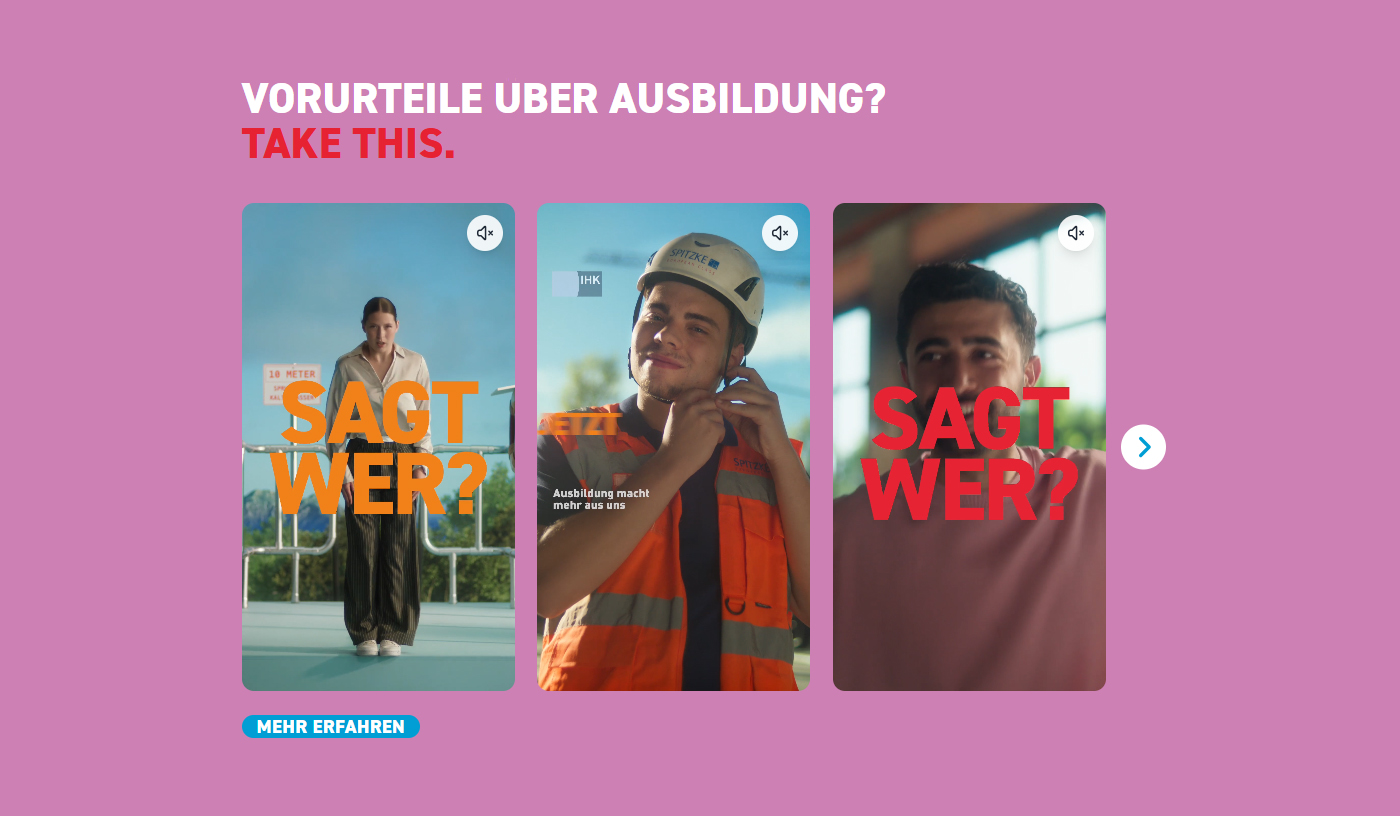
For more than four out of ten people in Germany, it goes without saying that after completing A-levels, one heads towards university. A new chapter of the German Chamber of Commerce and Industry (IHK) training campaign "Training makes more of us" aims to dispel this and similar prejudices.
The German economy creates jobs daily, drives innovation, and takes responsibility: With its new campaign "We Act!", the IHK organisation highlights the achievements of more than three million companies in Germany.
From labour costs and open markets to corporate taxes – Germany's economy urgently requires an upgrade. In a new LinkedIn series, the German Chamber of Commerce and Industry (DIHK) provides a compact and fact-based analysis of the necessary reforms and measures.
Bureaucracy, lengthy planning procedures, and lack of digitalisation are holding businesses back in Germany. Through a social media campaign, the DIHK highlights pressing problems at German business locations and showcases the economic policy reforms urgently needed to enhance Germany's...
China remains an important market and part of global supply chains. At the same time, Chinese competition is increasing - in China, Europe, and globally. German companies are responding. The framework conditions must also keep pace.
Efficient, technology-neutral, international: The IHK organisation strongly advocates redesigning the energy transition in Germany. Through studies, core positions, and surveys, the DIHK outlines what is necessary for companies to also manage the transformation.
There is an increasing consideration in the EU to implement local content requirements—mandatory local value creation shares. This has consequences for trade, competition, and Europe's position.
The German economy risks becoming a long-term patient. Companies are struggling with high costs for energy, personnel, and taxes, combined with crippling bureaucracy. An uncertain global economic environment and bottlenecks in critical raw materials exacerbate the situation further.
German businesses continue to show great interest in Ukraine, even as they remain cautious due to the Russian aggression and ongoing security concerns.
Digitalization is a key competitive factor and opens up a wide range of opportunities – from more efficient workflows to innovative business models. To ensure these possibilities are utilized everywhere, reliable frameworks, modern digital infrastructure, and a digitalized administration are...