
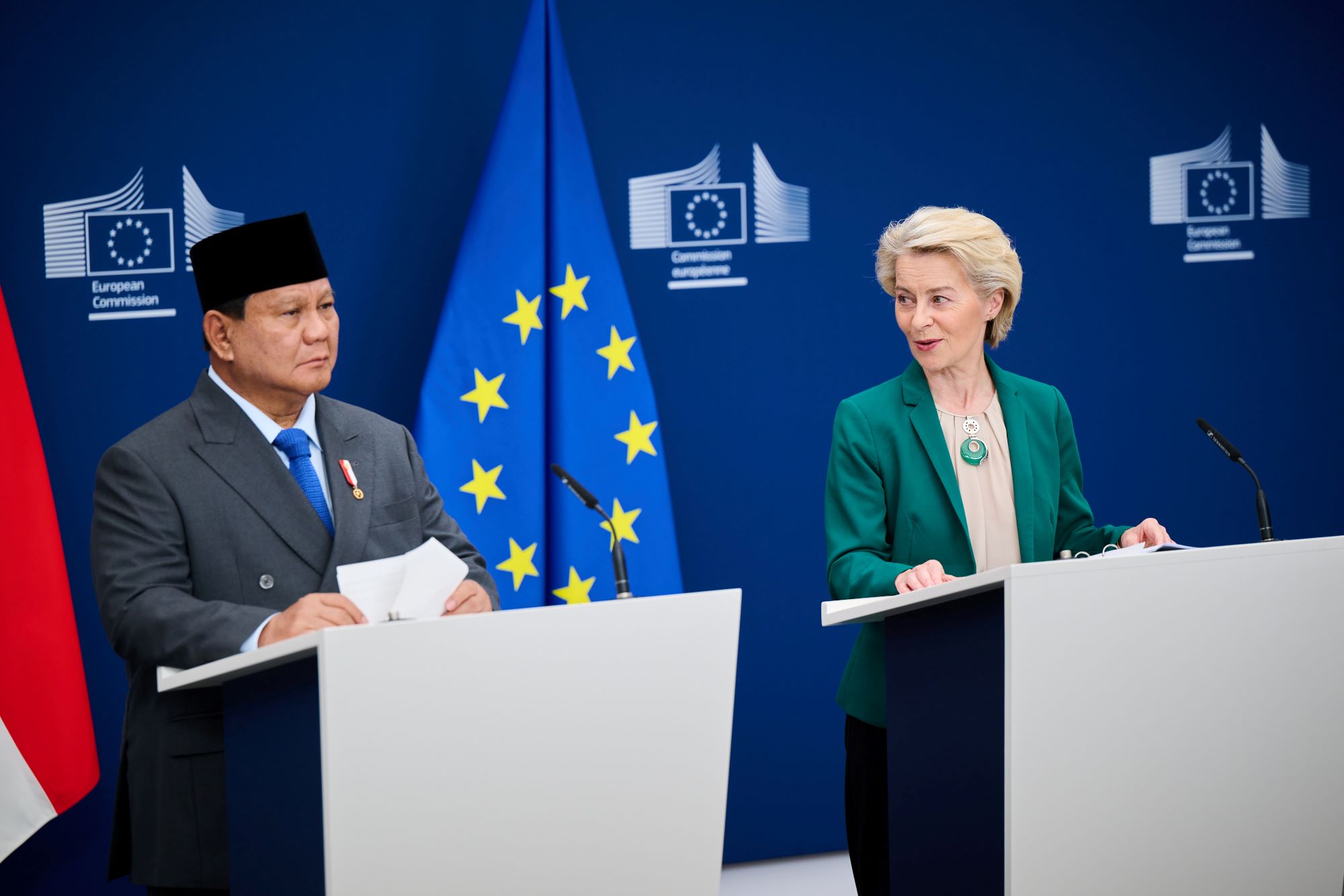

Indonesia is one of the world's most dynamic economies and is becoming increasingly important for German companies. As the EU-Indonesia negotiations near completion, the focus shifts to how the agreement can ensure fair market access, reliable rules, and genuine relief. For Germany's export-driven economy, this is critical – clear standards and fewer hurdles strengthen growth and competitiveness.
This article was Topic of the Week in the newsletter for week 39 in 2025.
EU Agreement with Indonesia Nearing Conclusion
On September 23, the EU aims to finalize nine years of negotiations with Indonesia for a trade agreement. This is welcome news for Germany's internationally interconnected economy: With nearly 300 million inhabitants, Indonesia is the largest domestic market in the flourishing association of Southeast Asian countries (Association of Southeast Asian Nations, ASEAN).
In times of global tariff conflicts, legally secure relationships and the reduction of trade barriers with this G20 member take on great importance. Comprehensive market access facilitation is key: instead of superficial agreements, the deal should encompass all business-relevant areas, including market access, regulatory cooperation, and intellectual property protection. Therefore, the German government ought to advocate within the EU for suitable negotiation results and expedite ratification.
Systematic Removal of Trade Barriers
During the negotiations, existing obstacles must be tackled rigorously. Currently, the EU identifies 17 formal trade barriers affecting European enterprises in Indonesia. Particularly relevant for Germany are high import tariffs, import and export restrictions, localization requirements, and closed procurement and service sectors. The primary goal for the EU-Indonesia agreement should be the removal of such trade restrictions.
An ambitious anti-corruption chapter would further facilitate local business activities. Both parties should also prohibit competition- and trade-distorting practices, especially industry subsidies and benefits for state-owned enterprises. A dedicated SME chapter could ease agreement usage for small and medium-sized firms, which are disproportionately affected by trade barriers.
Should Indonesia reject a comprehensive digital chapter, including rules against digital tariffs, the EU should abandon such a chapter. When it comes to sustainability, finalizing the agreement should remain the guiding principle. Integrating internationally accepted climate and environmental protection standards could align bilateral trade with common rules, avoiding unilateral measures.
Expanding Business Access
High tariffs and trade barriers hinder European businesses from successfully introducing innovations in Indonesia. Especially the high and often prohibitive import tariffs and further import duties burden German exporters. Over the past decade, duties on various goods competing with local products have increased – including electronics, milling machines, chemicals, cosmetics, pharmaceuticals, wine and spirits, iron wire and wire nails.
The agreement must block export bans, as Germany, being a resource-poor country, relies on secure access to raw materials. Likewise, bilateral market access for increasingly important service trade should be facilitated, and public procurement markets – including at sub-federal levels – should be opened. Agreements on mutual recognition of standards would simplify cross-border business significantly.
Simplify and Digitize Customs Processes
Effective implementation is crucial for the success of the agreement. Clear and harmonized rules for goods' origin, aligned with existing agreements, are essential. The German Chamber of Commerce and Industry (DIHK) has compiled concrete suggestions in a document. These rules significantly impact the agreement's utilization, implementation, and application.
Strengthening Geo-Economic Partnership
In 2024, Indonesia's trade volume with Germany was 7.3 billion Euros, and with the entire EU, it amounted to 27.3 billion Euros. EU investments in Indonesia exceeded 25 billion Euros in 2023. Over the last 25 years, Indonesia's emerging economy grew by an average of 5 percent annually.
Beyond mere trade figures, the archipelagic state plays crucial roles – both as a member of the Trans-Pacific Partnership and BRICS group (Brazil, Russia, India, China, South Africa) as well as an OECD candidate reshaping the global trade system in response to the new US trade policy. Accordingly, the EU should actively support Indonesia's OECD accession.
The EU-Indonesia agreement could also mark a first step toward closer economic ties with Southeast Asia. Additional agreements with Thailand, Malaysia, and the Philippines should follow swiftly and ultimately transition into a comprehensive EU-ASEAN trade agreement. This would sustainably strengthen European supply chains with the entire region.
- Relevant in topic:
- Internationaler Handel
- Key areas:
-
- Außenwirtschaft
- Diversifizierung
- Zoll
Released 22.09.2025
Modified 10.02.2026
Contact

Klemens Kober
Director Trade Policy, EU Customs, Transatlantic Relations