

The survey of nearly 5,000 companies from all industries reveals that businesses generally perceive themselves to be well-established in matters of digitalisation and cyber defence. However, it also highlights the need for improvements in framing conditions. Without reduced bureaucracy concerning the use of artificial intelligence (AI) or initiatives to strengthen digital sovereignty, businesses will face increasing difficulty in mitigating risks and seizing opportunities.
Key results of the survey
- Despite economic uncertainty, companies are keeping pace with digitalisation
- AI has arrived as a productivity factor in companies
- Gigabit expansion is advancing: proportion of covered companies up by 5 percent compared to last year
- Public administration hinders the digital transformation of the German economy
- Cybersecurity: Threat level remains very high, crisis preparedness needs improvement
- Digital sovereignty requires open interfaces & standards, competences and open source
Digitalisation at a solid level
The German economy is keeping pace with digitalisation. With an average rating of 2.8, the degree of digitalisation in businesses remains at a solid level. Twitter took two years to gain one million users in 2006, whereas ChatGPT reached this milestone in five days in 2022. Speed and development cycles have rapidly increased, as have the potentials and opportunities of digital innovations. Additionally, companies face challenging market conditions. This means that while businesses are not falling behind, they are also not catching up significantly. A certain level of digital maturity, with regard to structured processes or functional data management, is essential for the implementation of innovative digital applications.
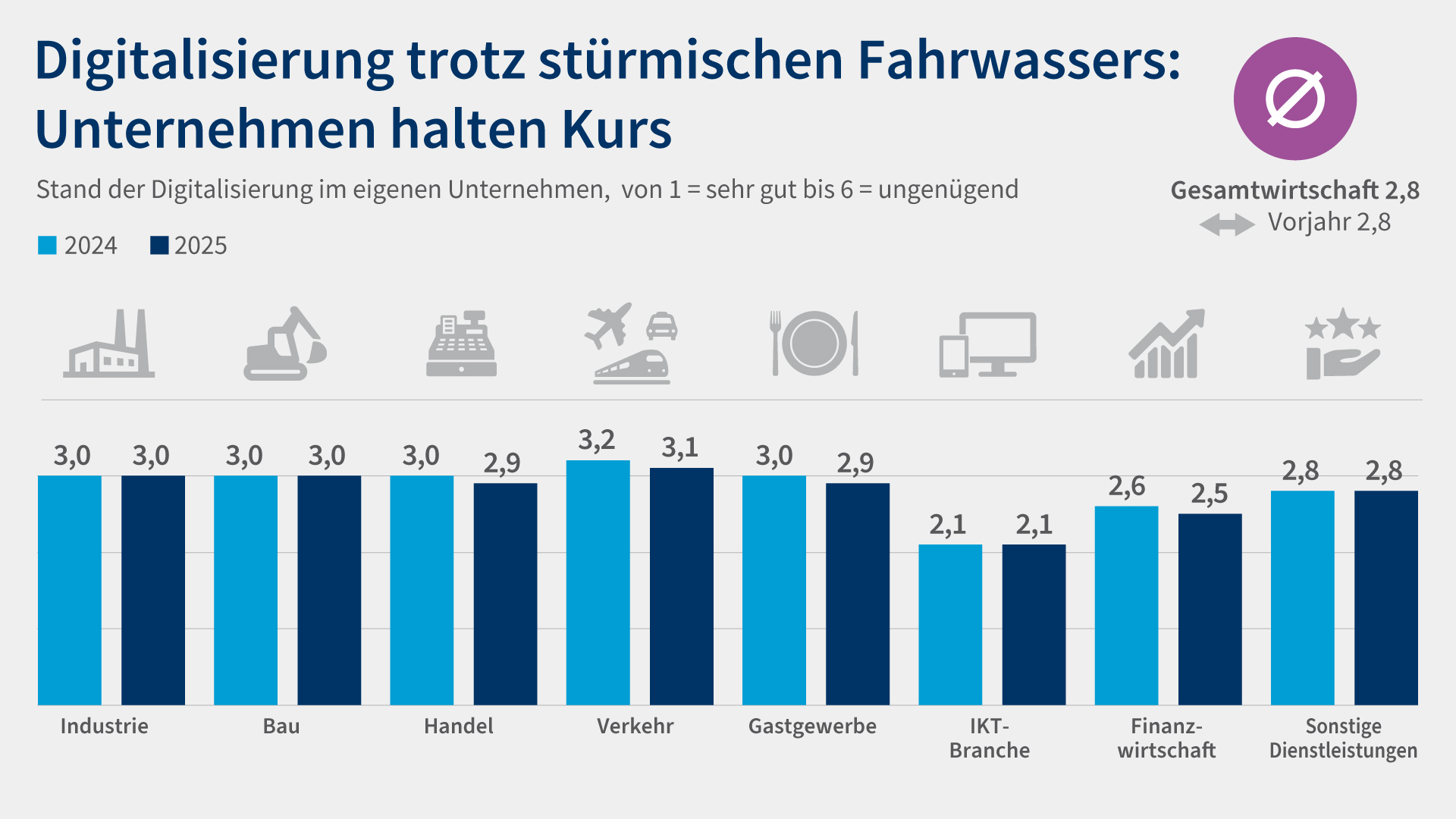
Digitalisation helps businesses tackle current challenges: high energy prices, geopolitical uncertainties, increasing customer demands. Businesses primarily digitalise to make (work) processes more efficient and improve product quality. Despite the challenging environment, more than a third of companies are using digitalisation to create innovative products, services, or new business models.
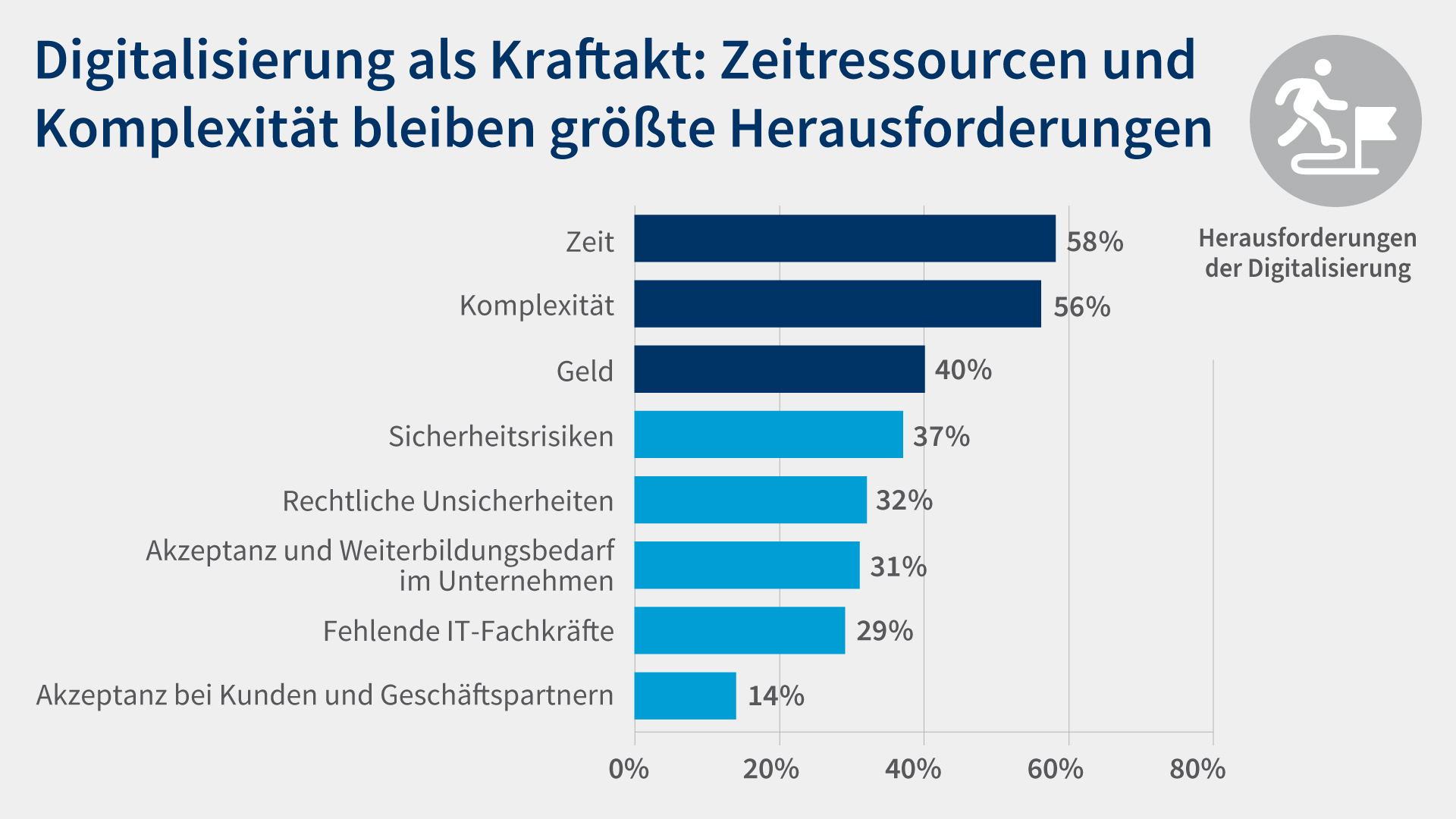
Digital transformation projects are complex and require significant time and resources. They often involve reorganisation of internal processes and employee engagement. Awareness of security risks has increased in companies compared to the previous year — rising from 34% to 37%.
AI as a competitive factor
Artificial intelligence has gained ground in companies — extending beyond standard applications. Generative AI for creating texts, images, or code is most commonly used (78%), followed by applications for personalised customer engagement and support (43%) and quality assurance and process monitoring (38%). Compared to the previous year, the use of AI for quality assurance and process monitoring has significantly increased. Product development and optimisation are gaining importance, particularly in the information and communication sector as well as in the industrial sector.
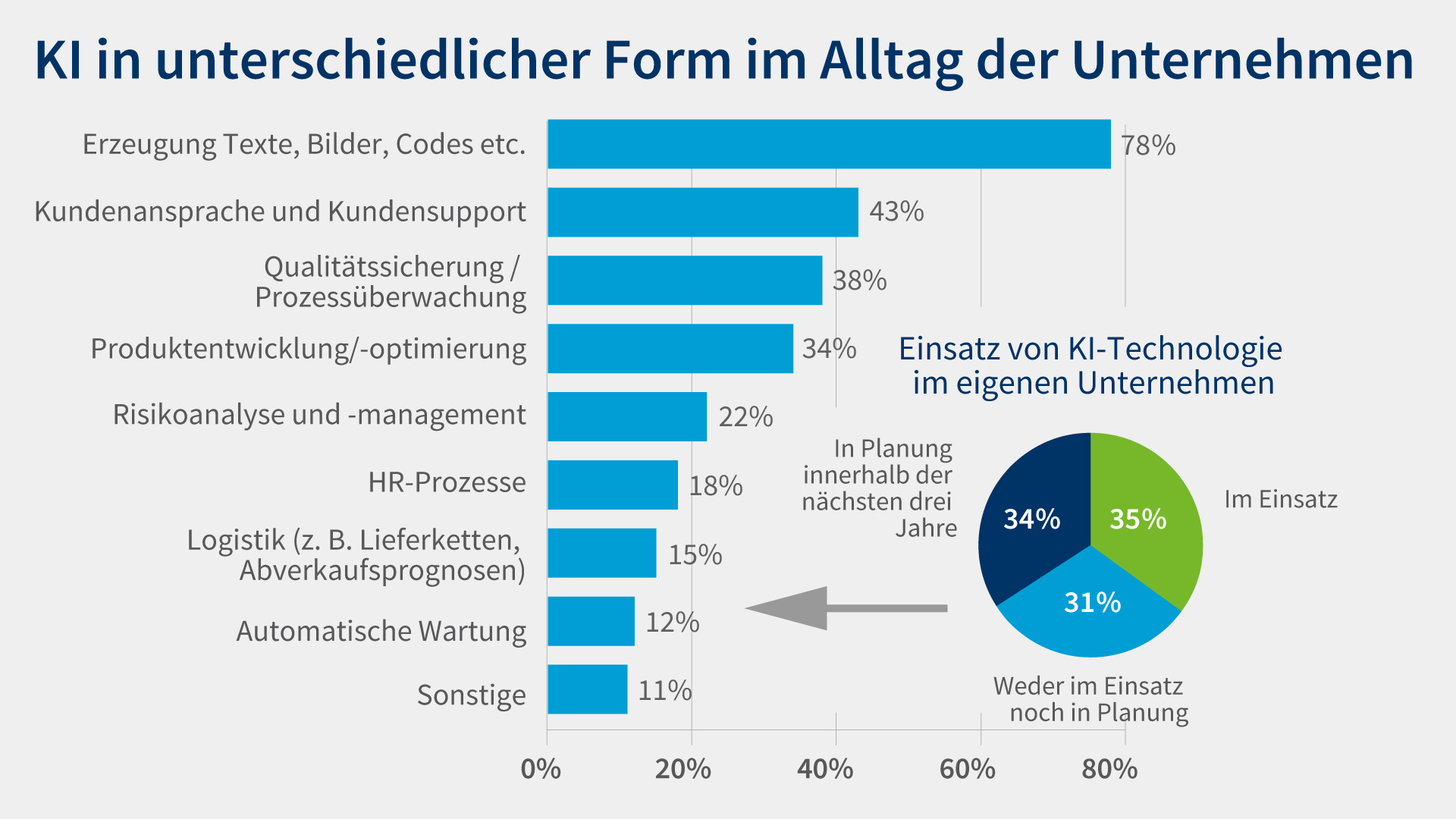
Industries utilise AI in greatly different ways: In the hospitality sector (62%) and trade (53%), priority is on personalised customer engagement, whereas the finance industry increasingly applies AI for risk analysis (41%). To address companies that are not yet utilising AI or planning it, targeted support regarding digital maturity is needed. AI is increasingly becoming a competitive factor — especially given the high cost of operations in Germany.
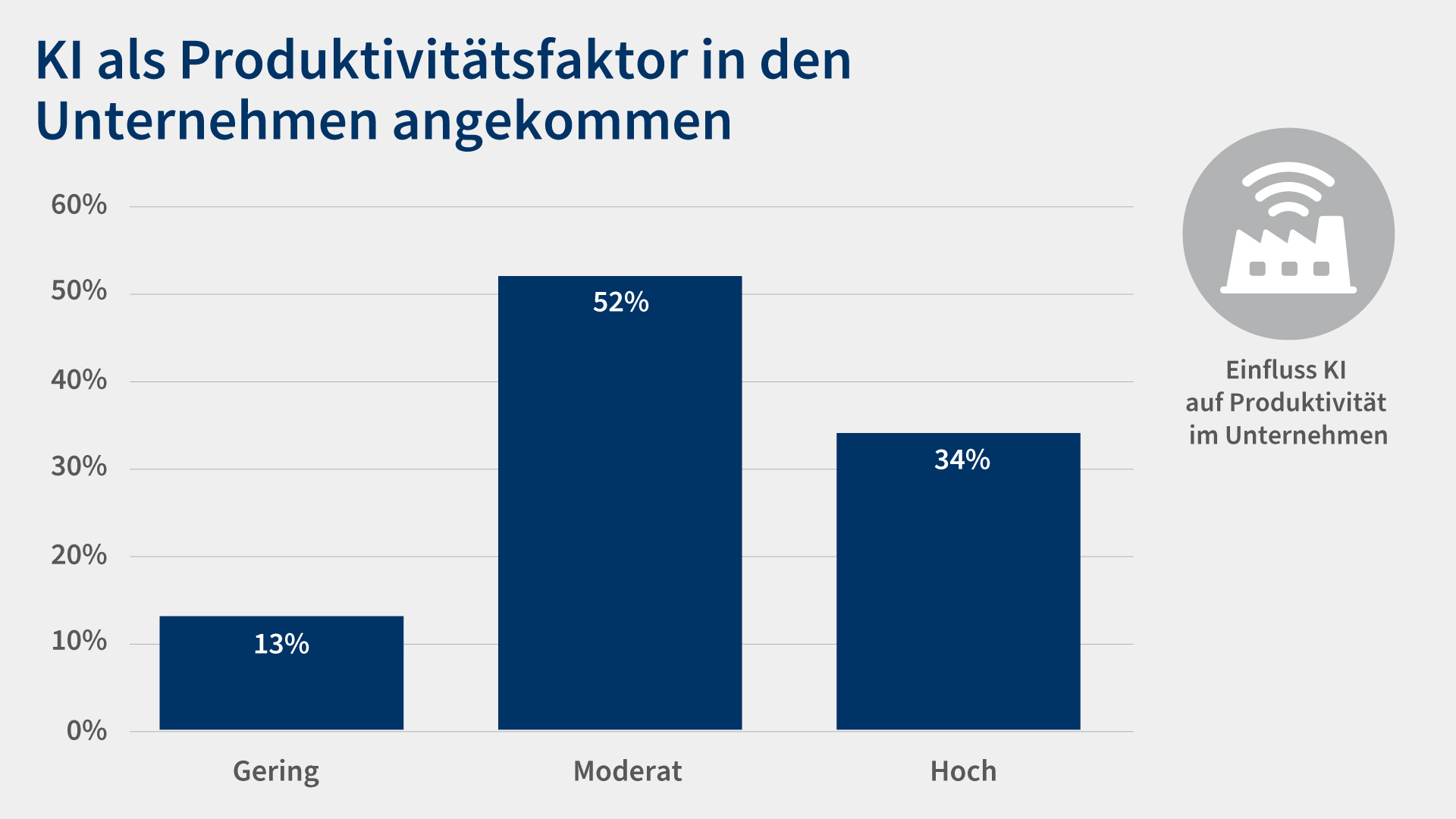
More than one-third of companies that are already using AI or plan to use it in the next three years expect a strong influence on their productivity. Among those already practically utilising AI technology, even 41% highly rate the productivity effect. The adoption of this technology is increasingly a competitive factor.
Productivity impact is assessed highest in the information/communication sector (49.7%) and the finance industry (46.4%), while industries like manufacturing, trade, construction, and hospitality observe primarily moderate effects. Differences in the evaluation of AI's productivity influence are ascribed to varying initial conditions and business models across industries.

In sectors such as information/communication and finance, digital processes and data-driven decisions are already strongly established. Here, AI can immediately build on existing systems and bring rapid efficiency gains — for instance, via automation, intelligent data analysis, or personalised services. In industries like manufacturing, trade, construction, and hospitality, potentials are similarly high, yet implementation tends to be more complex, as involves integrating physical processes, supply chains, or customer interactions.
Legal uncertainties remain the greatest challenge for businesses regarding data utilisation. Lack of expertise, restricted access to third-party data, and costs are cited less frequently as barriers compared to the previous year, while data quality gains slightly more focus in 2025.
Across all industries, data protection and technological barriers are core issues in data utilisation. Technical hurdles, such as data silos, lacking infrastructure, or software, are associated with the level of digital maturity and diminish with growing sophistication.
Expanding infrastructure and digitising administration
The digitalisation of businesses is critically dependent on how swiftly fibre-optic networks are extended to buildings and modern mobile networks become widely available. The increasing use of cloud technologies and artificial intelligence is also raising demand for high bandwidth.
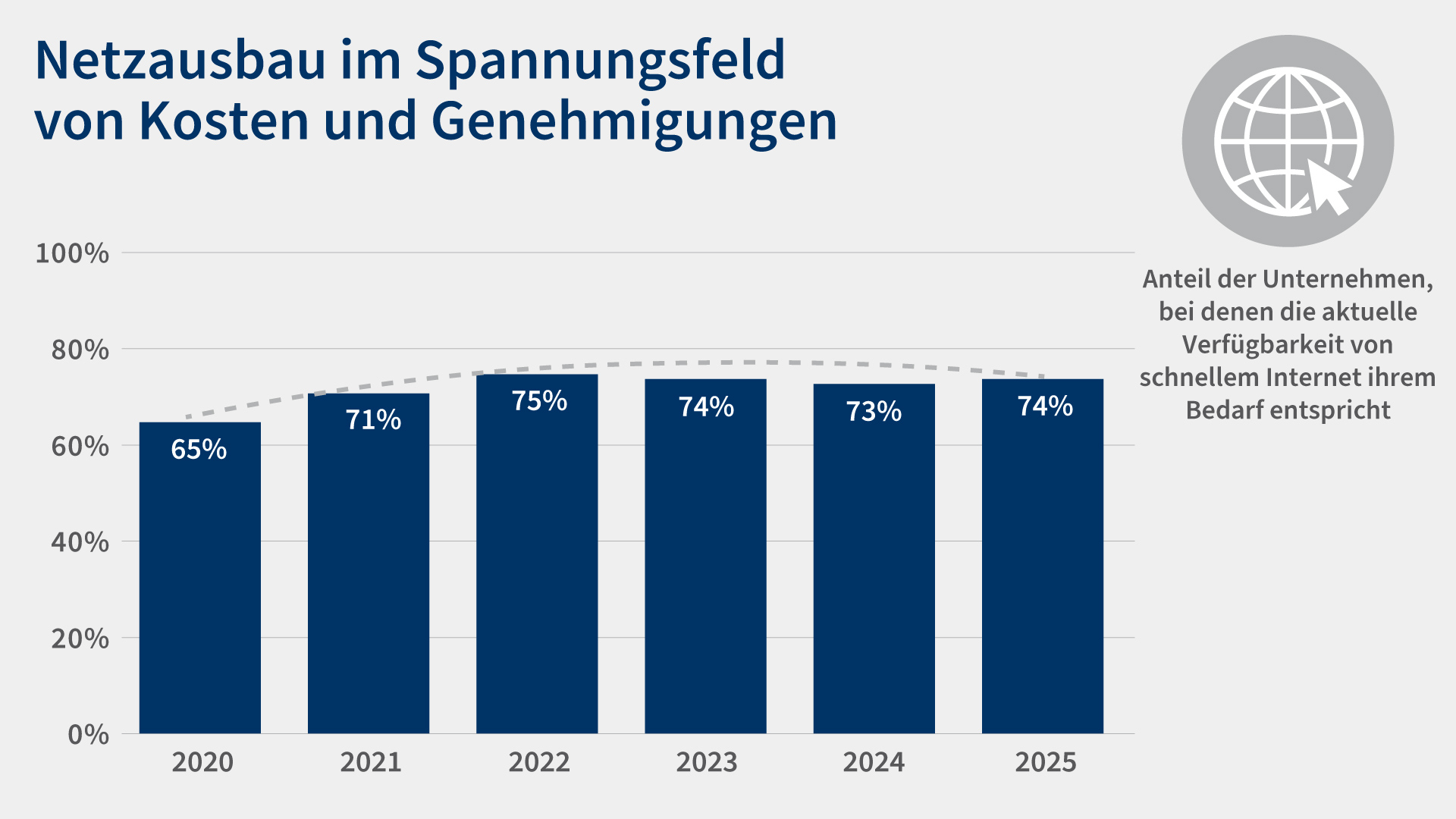
Already, 60% of companies that were able to comment on their internet connection (a quarter could not) have access to at least 1 Gbit/s. Nearly all of these companies consider their bandwidth sufficient. The proportion of businesses with gigabit connections has risen by 5% compared to the previous year.
The network expansion is typically driven by private providers in competition but encounters obstacles: High construction costs and lengthy, insufficiently digitalised approval procedures from public authorities slow down progress.
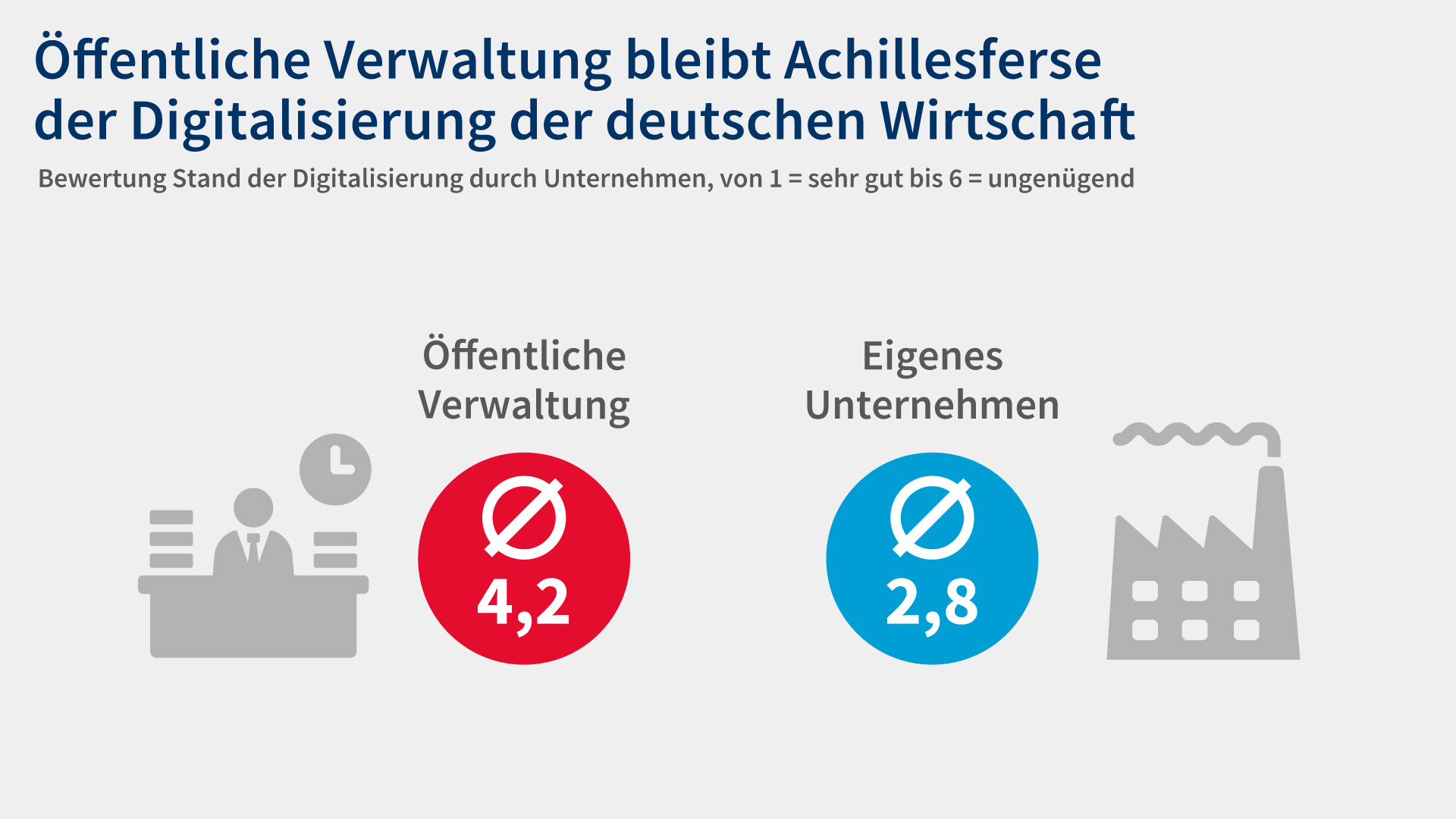
Progress in the digitalisation of public administration is hardly felt by companies thus far. Businesses rate administrative digitalisation poorly, with a performance grade that just meets requirements but shows substantial deficiencies. If public administration doesn’t keep pace with the digital progress in companies, it undermines location quality and economic competitiveness. One example is the expansion of fibre-optic and mobile networks hindered by lengthy approval procedures. National and local authorities must urgently modernise their structures and position themselves for the future.
For public administration to benefit from the innovation capacity of the private sector, fundamental technical architectural issues and federal bottlenecks must be resolved. A reformed procurement law should facilitate access for start-ups and small and medium-sized businesses to public contracts. From a resilience perspective, public administration should also utilise its demand force to endorse sovereign solutions within the digital ecosystem.
Mitigating cyber stress
The broader attack surface due to progressing digitalisation, geopolitical conditions, and further professionalisation of attacks — partly powered by artificial intelligence — contribute to the overall high threat level. The industrial sector as well as the transport and logistics sectors are prime targets for attackers. Cybersecurity remains particularly critical for medium-sized and larger businesses. Smaller companies, while less affected, also carry significant risk.
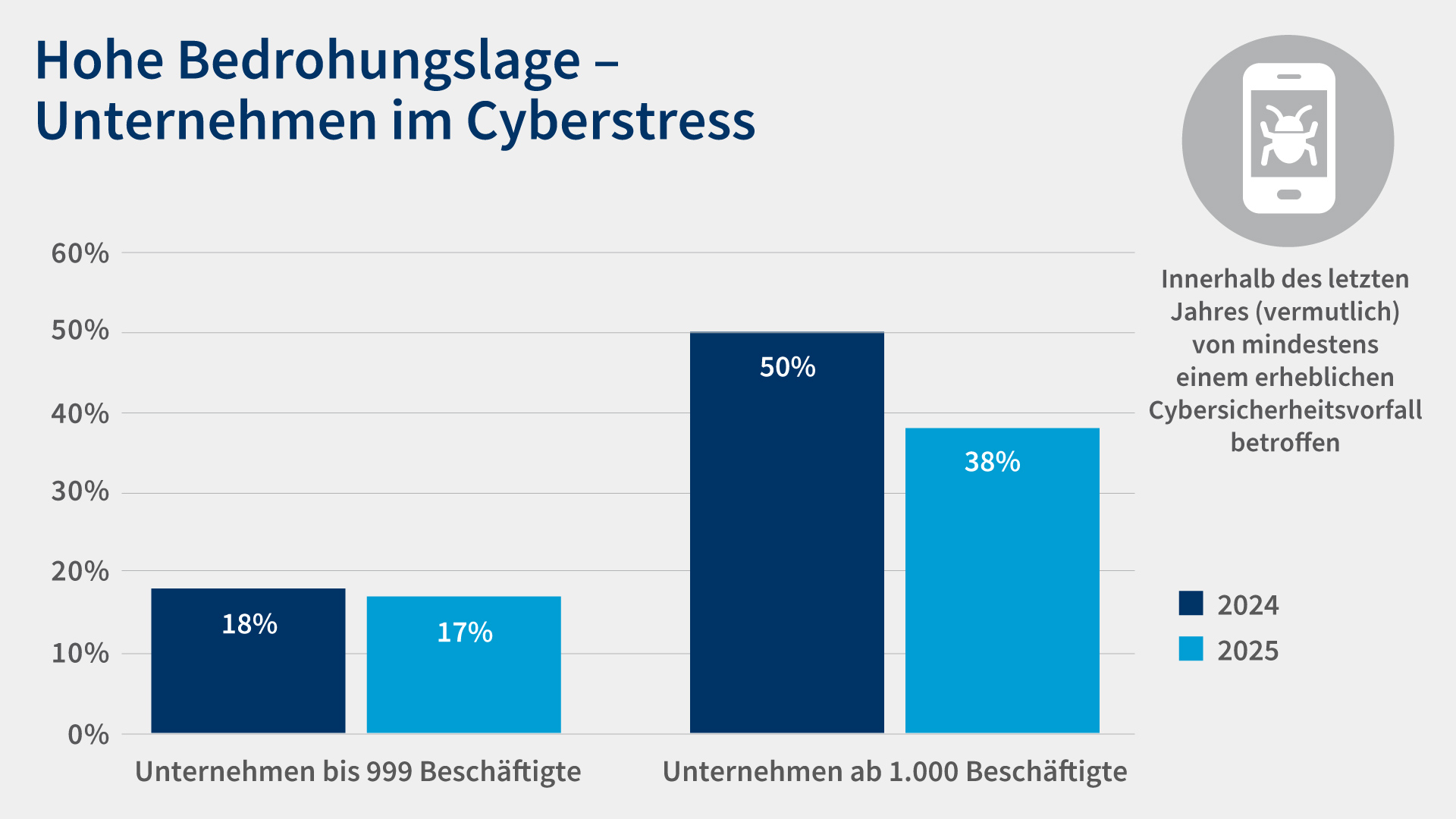
The number of significant cyber incidents has remained stable, and for larger companies, even decreased. Businesses seem to manage better protections. The notable decrease among larger enterprises might indicate improved safety measures and better evaluation capacity concerning critical security incidents as well as adherence to regulatory requirements. The ICT sector reports the least incidents — their professional precautions evidently pay off.
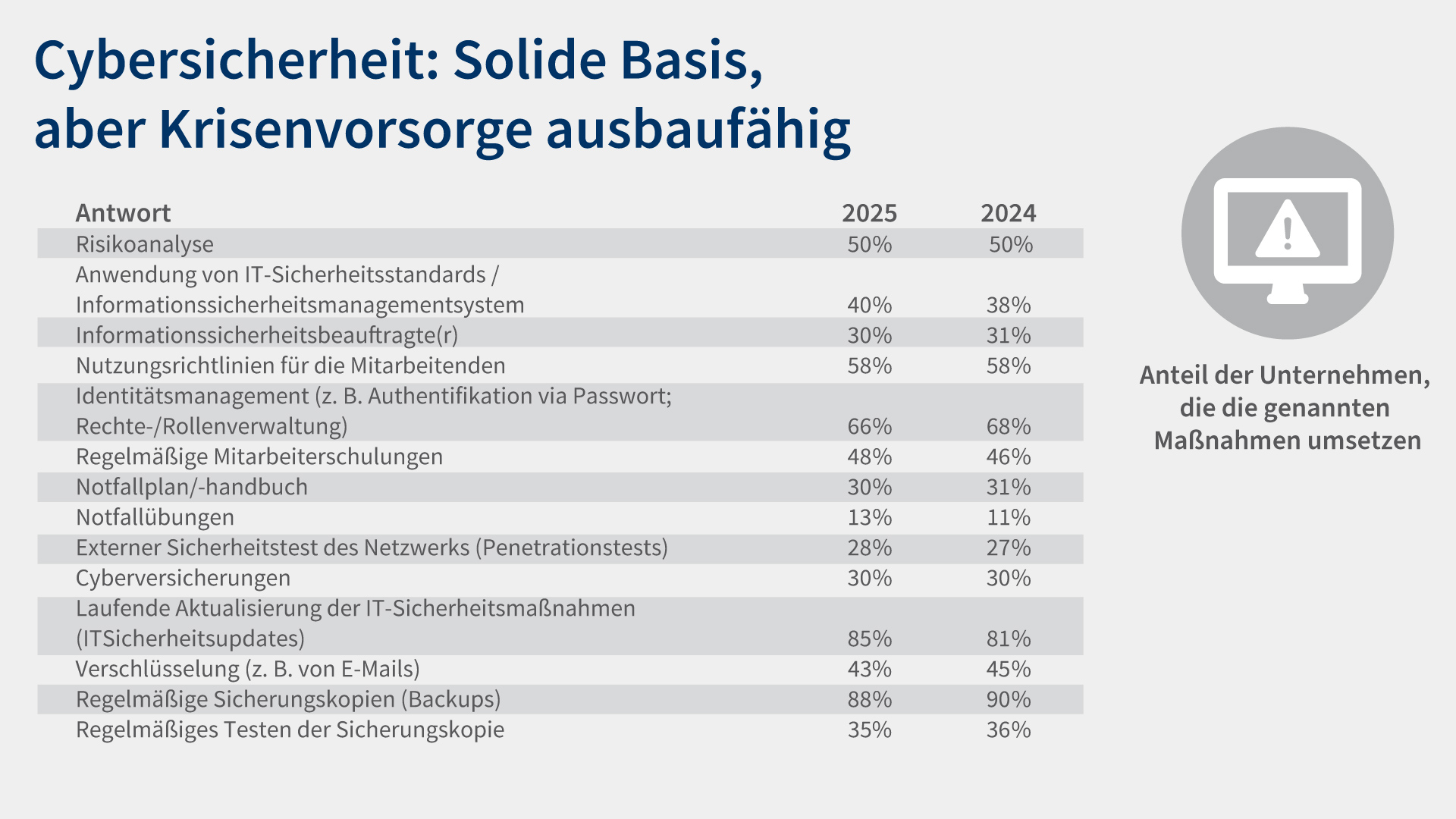
Overall, companies focus on prevention but still have room for improvement in preparing for emergencies, especially among businesses with fewer than 250 employees. Medium-sized and larger enterprises are well-prepared. Industry and finance have broadly implemented most measures, equally the ICT sector.
Basic technical measures like backups, updates, and identity management are widely adopted, whereas proactive organisational measures like penetration tests, emergency drills, or rehearsal backup reinstallation remain underrepresented.
Companies must keep prioritising cybersecurity measures and focus on resilience to ensure quick recovery post-attack and limited damage.
Need for more independence
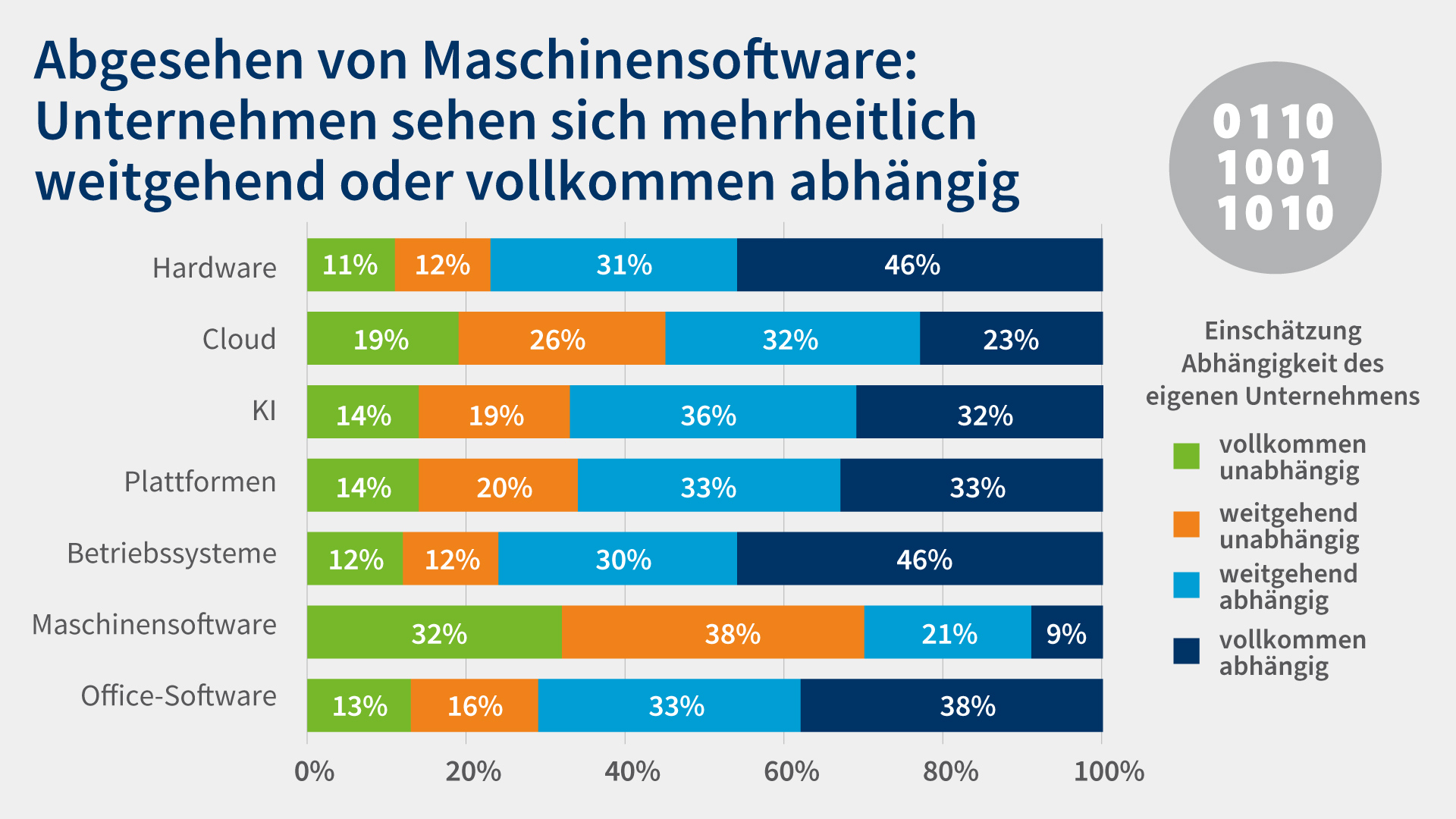
Concerningly, businesses perceive themselves to be highly dependent on non-EU countries across almost all sectors. Dependencies are considered particularly strong in hardware and operating systems, where 46% of respondents assessed complete dependence. The German economy sees an urgent need for political action.
Businesses demand reliable framework conditions for digital transformation. This is evident from the more than 400 free-text responses. By reducing overall bureaucracy and implementing innovation-oriented regulation, companies should be granted greater operational freedom.
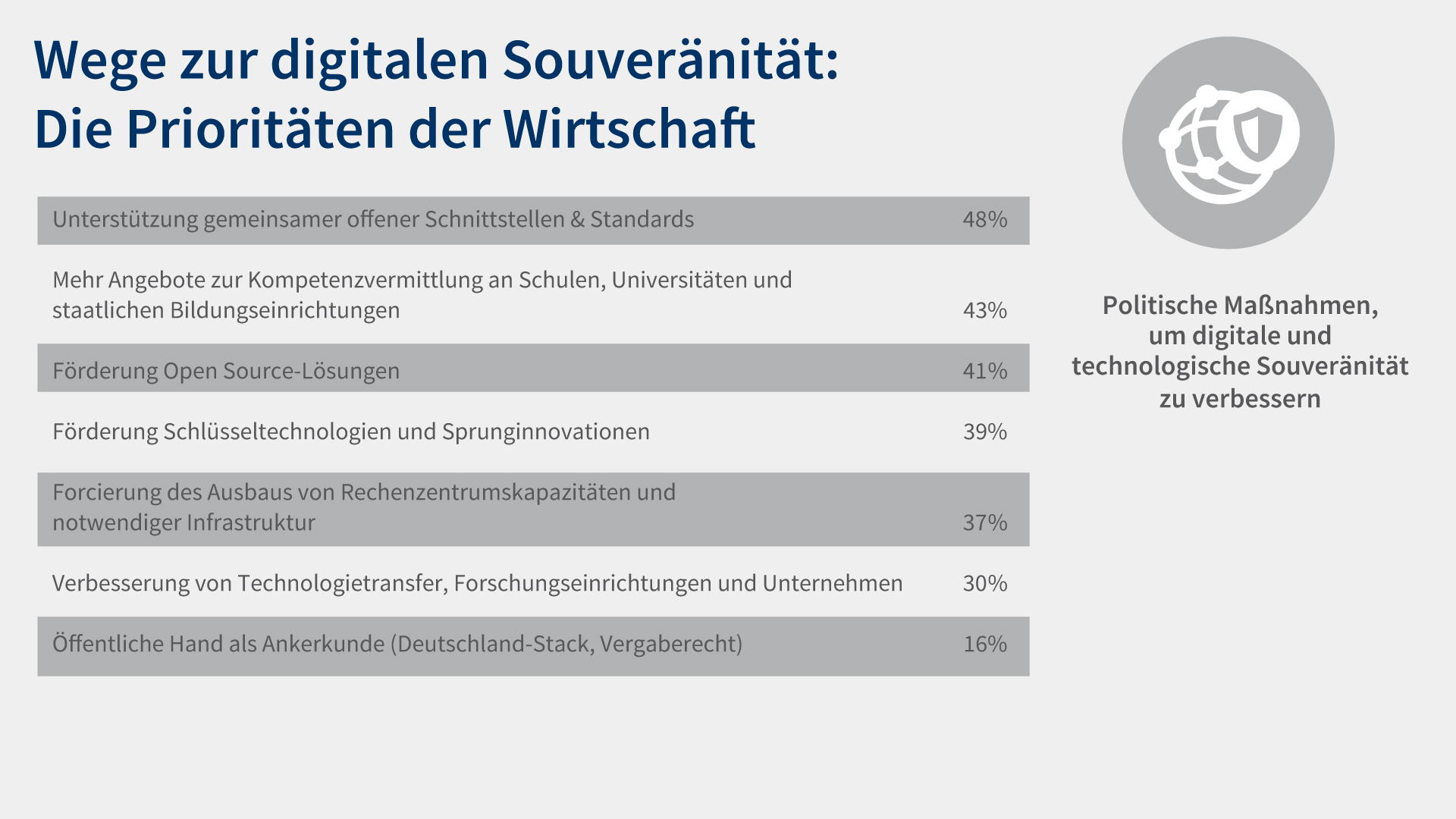
According to respondents, support for common open interfaces and standards, improved delivery of digital skills in schools and other public education institutions, and promotion of open-source solutions particularly contribute to enhancing digital sovereignty. Additionally, targeted promotion of key technologies and breakthrough innovations as well as expansion of data centre and infrastructure capacities have been requested.
Act now
In the free-text responses, alongside targeted support for proprietary European solutions, there is emphasis on a sovereign, user-centric administrative digitalisation based on private-sector solutions. Other topics include expanding fibre-optic and energy networks and IT security — coupled with a clear call to action: Act now!
Requirements of the Economy
- Digitalisation
A certain level of digital maturity is crucial for the application and implementation of digital innovations, particularly for smaller companies. Targeted assistance programs from the EU, national, and regional levels – such as the Mittelstand-Digital Centres or the European Digital Innovation Hubs – should be accurately further developed.
- AI & Data
The implementation of AI is increasingly becoming a competitive factor. To enable companies to adopt AI solutions and efficiently use data, clear and legally secure frameworks are required. The legal framework must remain innovation-friendly, consistent, and cohesive to reduce bureaucratic efforts, avoid double obligations, and eliminate regulatory contradictions.
- Infrastructure Expansion
The expansion of fibre optic and mobile networks is often delayed by lengthy, non-fully digitised approval procedures conducted by public authorities. Federal, state, and local governments must urgently modernise their structures and prepare for the future.
- Modern Administration
A fully digitised administration forms an essential pillar of progress. Companies demand consistently digital and straightforward processes. Therefore, the public sector should build a platform-based administrative ecosystem that operates efficiently while integrating the innovation potential of the private sector.
- Cybersecurity
Continuous improvement is required in the area of cybersecurity. Key priorities include closer collaboration between the state and industry along with tailored support services that cater to the diverse needs of businesses.
- Digital Sovereignty
Regarding digital sovereignty, companies primarily need reliable political frameworks, less bureaucracy, and regulation supportive of innovation. Priorities should focus on open interfaces and standards, digital education, promotion of open-source initiatives alongside investments in key technologies, data centres, and infrastructure. Reformed procurement laws should make public contracts more accessible for startups and small-to-medium enterprises. Public administrations should leverage their purchasing power within a digital ecosystem focused on sovereign solutions.
Download
All graphics are also available in PDF format:
DIHK Digitalisation Survey 2026 (PDF, 865 KB)(only available in German)
- Relevant in topic:
- Innovation and Digitalisation
- Key areas:
-
- Digitalisation
- Cybersecurity
It has been translated with the assistance of AI.
No guarantee is made as to the accuracy or completeness of the translation.
Released 28.01.2026
Modified 30.06.2026
Contact

Arian Siefert
Director Digital Economy

Dr. Katrin Sobania
Director Information and Communication Technology | E-Government | Postal Services | IT Security
