

Business startups bring fresh energy and new ideas into the market, strengthening the economy's future viability. At first glance, it is encouraging that the advisory services offered by the IHKs are seeing increased demand once again. The DIHK Startup Report 2026 paints a nuanced picture of development and highlights that entrepreneurs perceive a need for reforms, particularly concerning bureaucracy, taxes, and financing.
Key Points at a Glance
- Increasing Interest:
Interest in starting businesses in industry, trade, and service sectors is rising; the German Chambers of Commerce and Industry (IHKs) report significant increases in initial consultations (up by 13%) and start-up advice sessions (up by 15%). - Shifting Motivations:
Plans to become self-employed are often driven by economic pressures and a lack of alternative employment options. - More Gaps in Concepts:
The quality of business plans is declining: nearly half show commercial deficiencies, and 44% of founders have not thoroughly considered financing. - Female Entrepreneurship on the Rise:
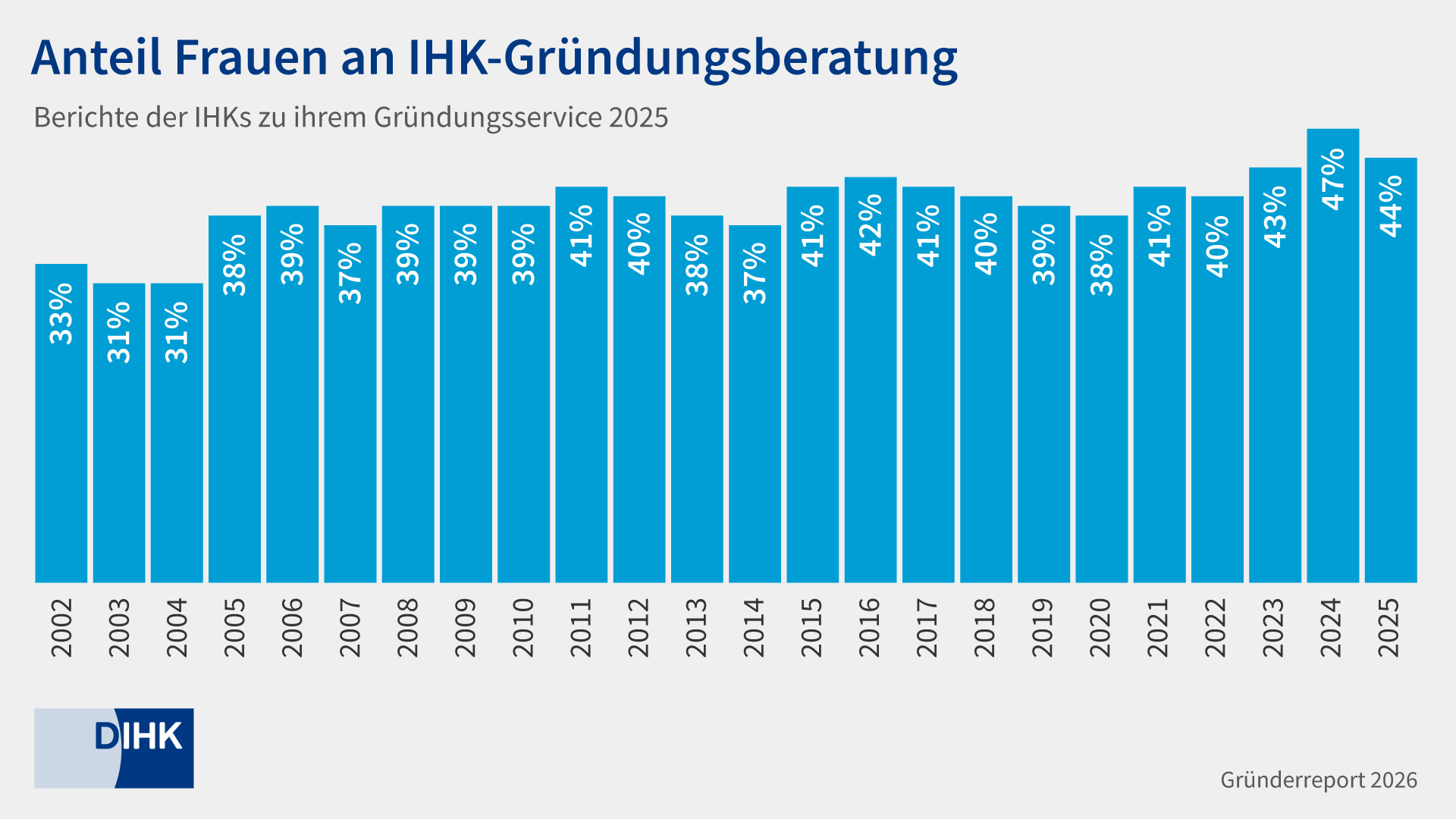
The proportion of women in IHK start-up consultations remains high at 44%, confirming a long-term structural shift in entrepreneurship. - Numerous Barriers:
The biggest hurdles cited by entrepreneurs are bureaucratic burdens and challenging economic conditions with high costs and uncertainties. They primarily call for reduced bureaucracy (73%) and simplified tax laws (61%) from policymakers.
Increased Interest, Often Due to Lack of Alternatives
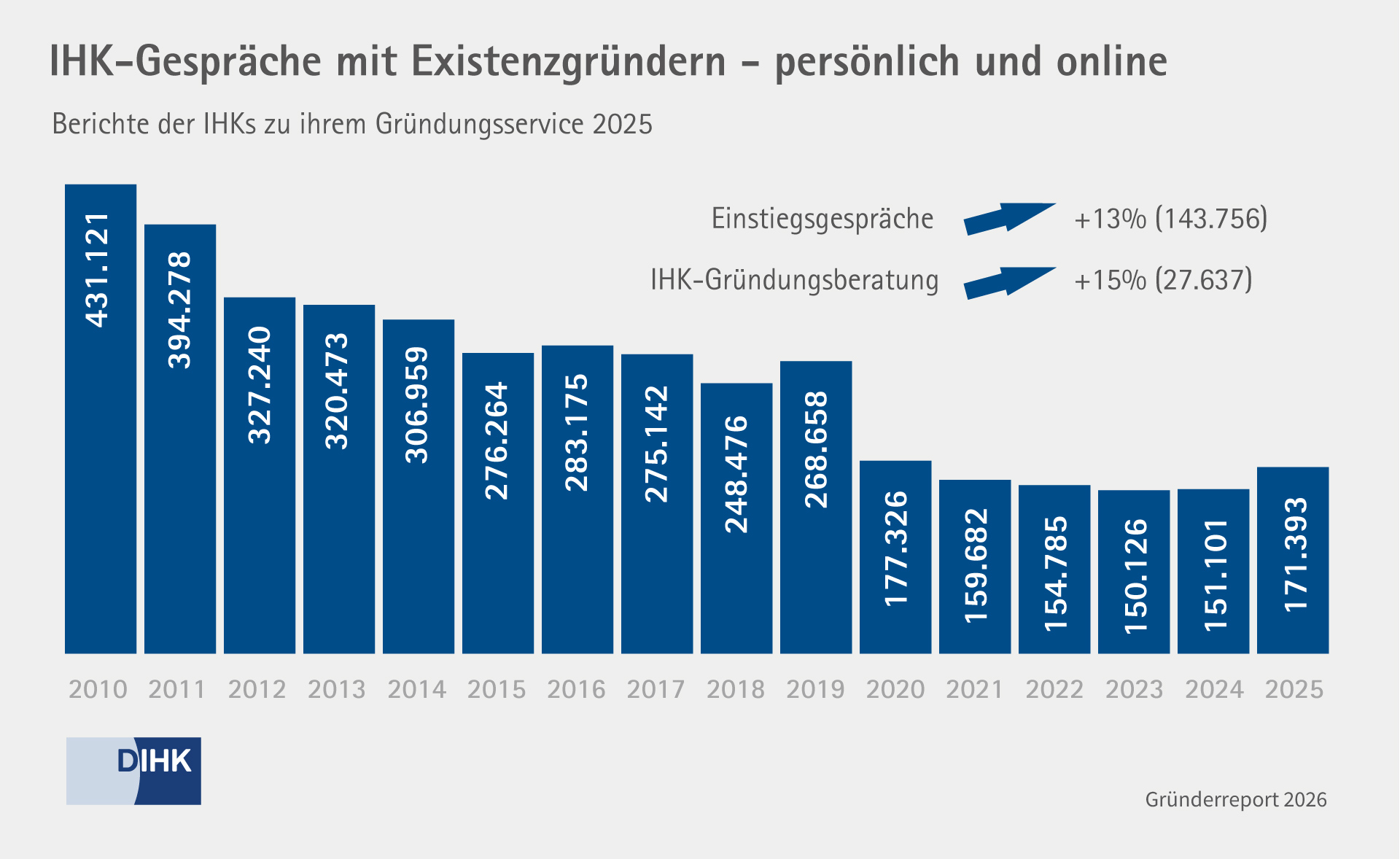
Interest in starting a business in industry, trade, and service sectors is rising: The IHKs recorded significant increases for 2025 in initial consultation participants (up 13% to 143,756) and subsequent IHK advisory consultations (up 15% to 27,637). However, much of this growth reflects employment restructuring: Poor economic conditions and structural barriers are pushing even well-qualified employees to consider entrepreneurship due to a lack of employment alternatives. This often leads to shifts from dependent employment to self-employment, frequently out of economic necessity.
Simultaneously, opportunity-driven startups, particularly from academia, continue to emerge. Technological transformation is becoming increasingly influential in shaping the startup landscape. Artificial Intelligence is increasingly identified by the IHKs as a driver of entrepreneurship, as it enables new business models and facilitates entry into self-employment.
Additionally, opportunities arise in defence and security, where the evolving geopolitical situation is increasing demand for innovative solutions by the army and security agencies, creating market openings for technology-oriented startups and young growth enterprises.
More Startups Stemming from Lack of Employment Alternatives
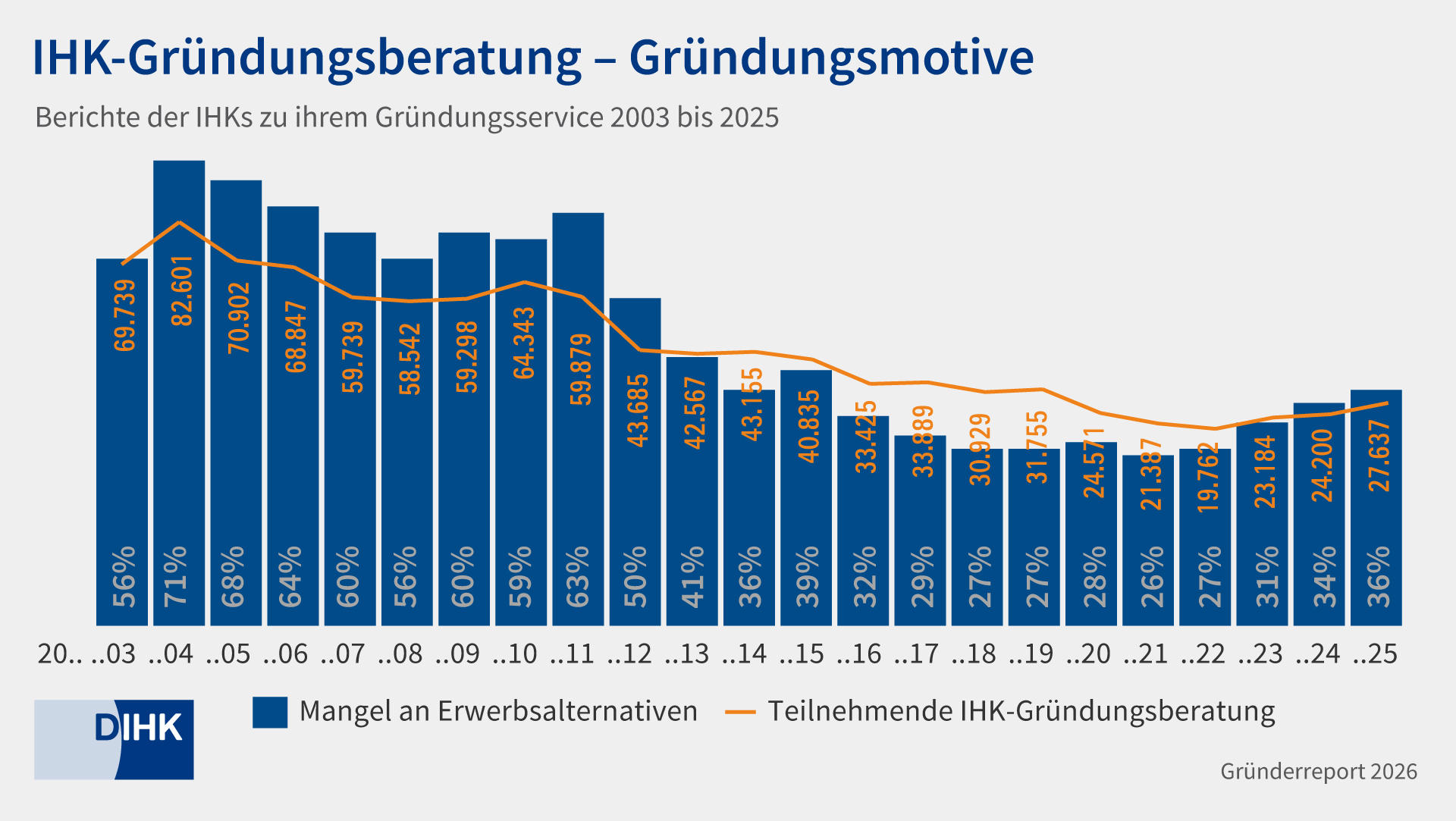
Nearly all IHKs cite the lack of job alternatives as the principal reason for the increased interest in startups. Amidst rising unemployment, uncertain employment perspectives, and increasing insolvencies, self-employment is becoming a contingency and safeguarding strategy for many. Accordingly, the share of those in IHK's startup advisory services intending to launch a business primarily out of a lack of employment alternatives reached 36%, the highest in eleven years.
Role of Startup Incentives
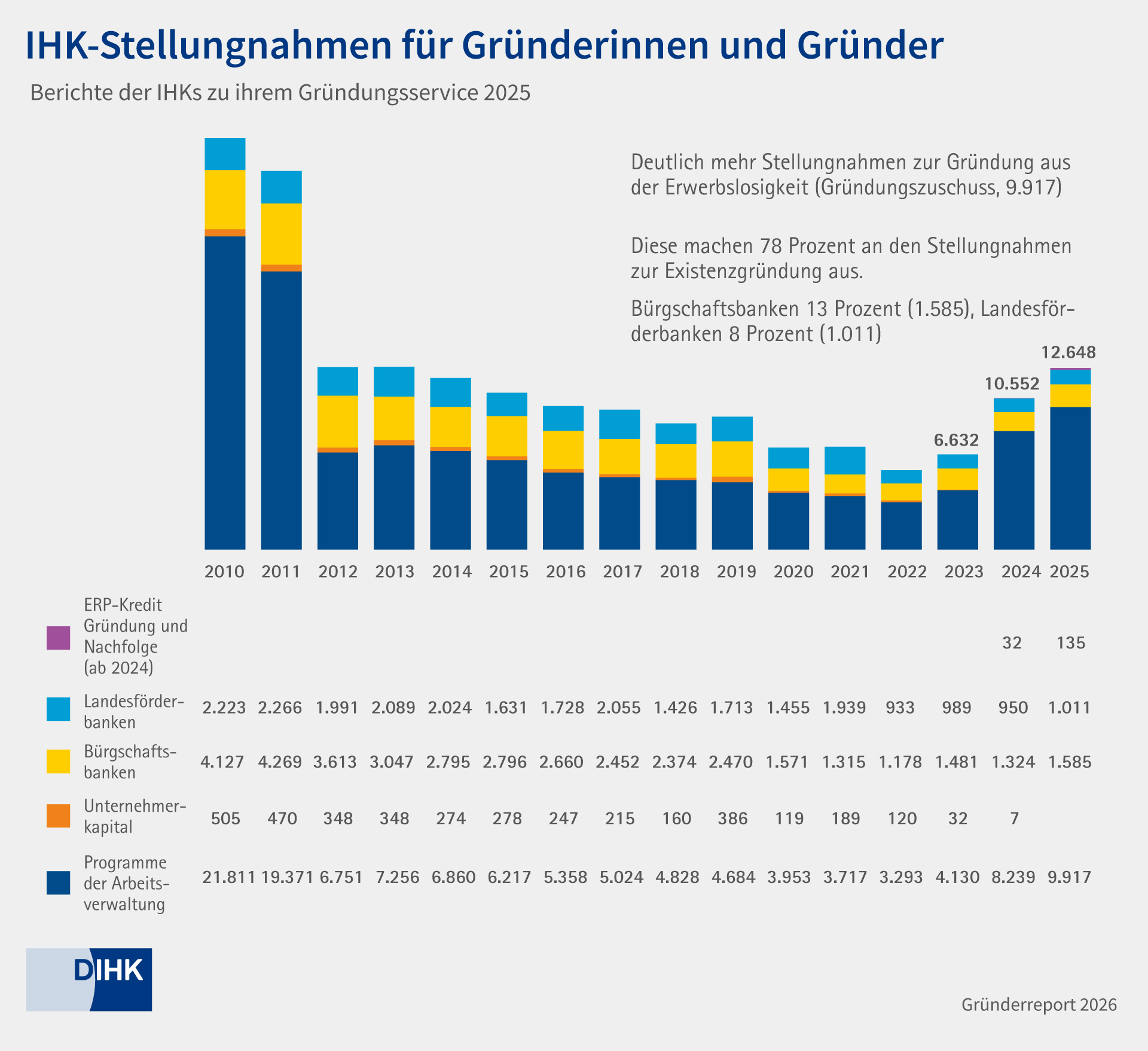
The trend is further reinforced by changes in startup subsidies, notably the elimination of priority placement requirements for unemployment startup grants. Since early 2023, self-employment is considered an equal employment policy option to dependent employment, leading to a delayed rise in applications and increased interest in startups among unemployed individuals.
The number of IHK advisory opinions for applications for startup subsidies has more than doubled compared to 2023, now comprising 78% of all IHK opinions issued.
Deficiencies in Business Plans
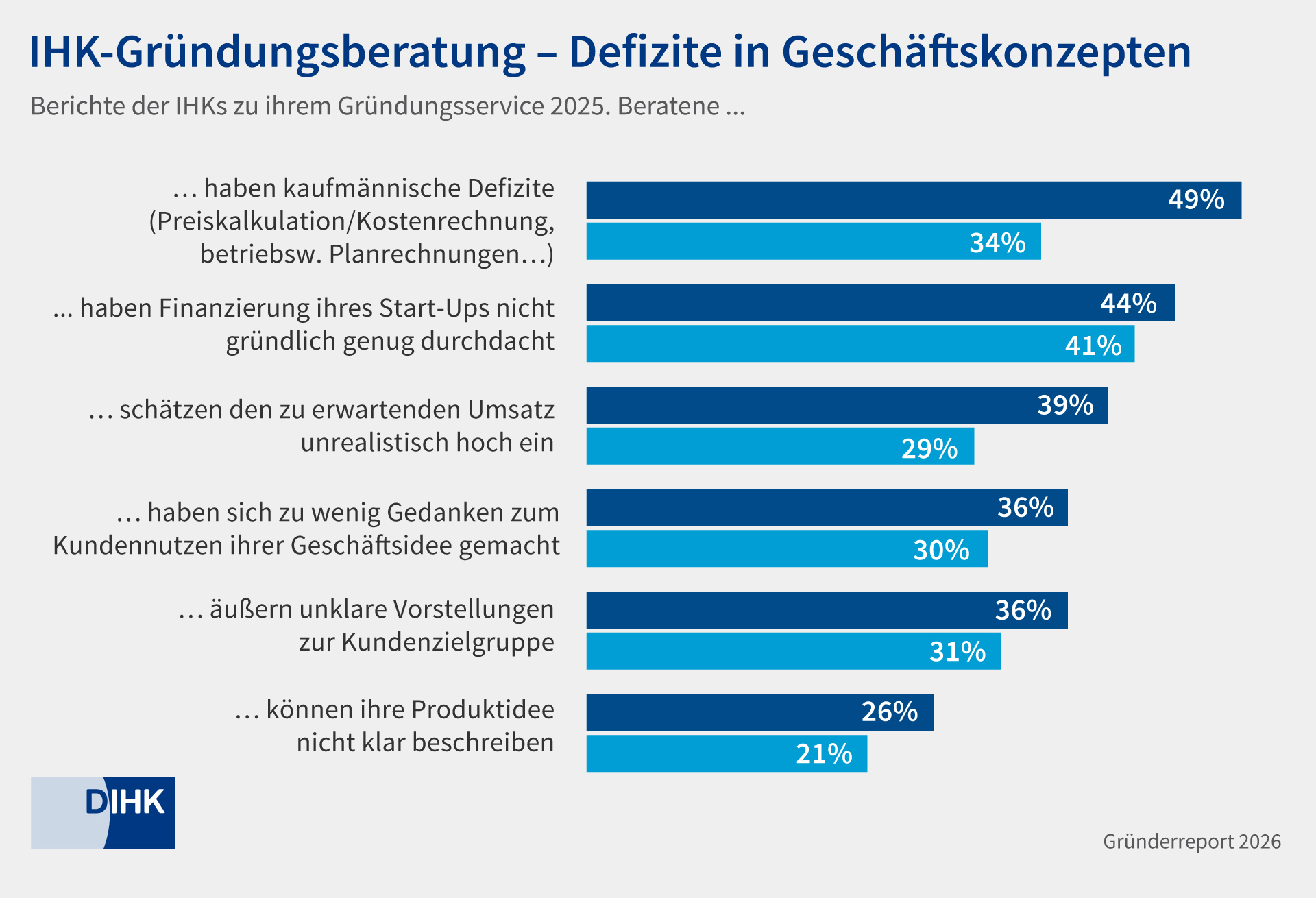
With increased interest comes a noticeable rise in the number of qualitative deficiencies in submitted business plans reported by the IHKs. Insufficiently elaborated or poorly sustainable plans are becoming more common. Alarmingly, 49% of plans show deficits in "basic business skills" and 44% lack adequate financing strategies for their business ideas.
Thus, IHK feedback on qualification structures presents a differentiated picture: On one hand, well-qualified entrepreneurs from industry and academia continue to seize entrepreneurial opportunities. On the other hand, there is an increasing share of startups driven by a lack of employment options, often accompanied by less thorough preparation.
Female Entrepreneurship Becomes the Norm
The percentage of women participating in IHK startup consultations remains high at 44% in 2025, underscoring a long-term structural change in the startup scene. In the early 2000s, this figure stood at approximately one-third. The IHKs have played a significant role in this development, supporting around 75,000 women across Germany in initial consultations and intensive advisory sessions on their path to self-employment in 2025 alone.
Where Entrepreneurs See the Most Need for Reform
The primary obstacles faced by entrepreneurs in Germany are revealed in a survey of startups and young enterprises across the nation. Out of 791 respondents, they rate Germany as a startup destination as "fair" (3.5 out of 5).
Major reasons include persistently high bureaucratic burdens and difficult economic conditions with elevated costs and uncertainties. Economic policies should aim to position Germany as an attractive destination for startups by providing favourable conditions for innovative ideas to thrive.
Entrepreneurs demand a substantially simpler, faster, and more flexible environment for entrepreneurial action: 73% desire faster and simpler regulations, 61% call for simplified tax laws. Improved access to funding, greater societal understanding of entrepreneurship, energy costs, IT infrastructure, better capital access, and networking are also noted as important factors.
By highlighting these barriers, respondents simultaneously provide concrete points for improvement. Policymakers are already addressing key DIHK demands to promote entrepreneurship. The focus must now shift to implementing these measures effectively and practically.
Recommendations to Policy Makers
IHK Start-Up Service in Two Stages
The German Chambers of Commerce and Industry (IHKs) provide neutral support to start-up entrepreneurs without any commercial interest. Their focus is on the economic aspects of starting a business, appropriate start-up funding, and the necessary permits and registrations.
At the first stage, the IHKs provide entrepreneurs with the most important basic information for starting a business—through introductory meetings, information events, webinars, start-up days, and print and online information. Topics and areas covered include:
- Fundamental information about entrepreneurial self-employment that prospective business owners need before starting, irrespective of their specific business idea.
- Personal and professional prerequisites for self-employment, business plan calculations, social security, and mandatory notifications—both regulatory and general ones, such as tax-related obligations.
At the second stage, the IHKs offer tailored services in their start-up consultations, which include:
- In-depth discussions of the usually already prepared business plan. (Typical questions include: What is unique about the business idea? How is the industry expected to develop? What funding opportunities are available? What financing options exist? How should initial discussions with potential financing partners be prepared?)
- A statement from the IHK regarding the funding application of start-up entrepreneurs, whose business plan has been previously discussed during an IHK consultation session.
Download (only available in German)
- Publication
-
DIHK-Report Unternehmensgründung 2026
- Summary
- Mit ihrem Report Unternehmensgründung legt die DIHK eine Einschätzung der IHK-Organisation zum Gründungsgeschehen in Industrie, Handel und Dienstleistungsbranchen vor. Grundlage sind Erfahrungsberichte der IHK-Existenzgründungsberater und eine Auswertung zum IHK-Gründungsservice sowie eine Befragung von Gründern, Start-ups und jungen Unternehmen zu ihren Empfehlungen und Forderungen an die Politik.
- Information
-
File format: PDF (accessible)
File size: 1 MB
Status of: August 2026
Page count: 19 pages
- Relevant in topic:
- Business Development
- Key areas:
-
- Small and Medium-sized Enterprises (SMEs)
- Start-ups
- Reducing Bureaucracy
It has been translated with the assistance of AI.
No guarantee is made as to the accuracy or completeness of the translation.
Released 05.08.2026
Contact

Dr. Marc Evers
Director Policy for SMEs, Start-ups, and Business Succession