

The survey, which involved around 3,100 companies across all sectors and regions in June, presents a clear picture of the energy transition: businesses seek climate policies that balance decarbonisation with competitive viability. At the same time, the survey underscores the urgent need for action: conditions for energy-intensive businesses, as well as for trade, have significantly worsened.
Many companies are now at their limits. Global crises coincide with persistent structural challenges in Germany as a business location, with energy costs evolving into a major economic risk.
Over the past twelve months, electricity costs have increased for 49% of companies, and heating (gas, district heating, fuel oil) became more expensive for 67%.
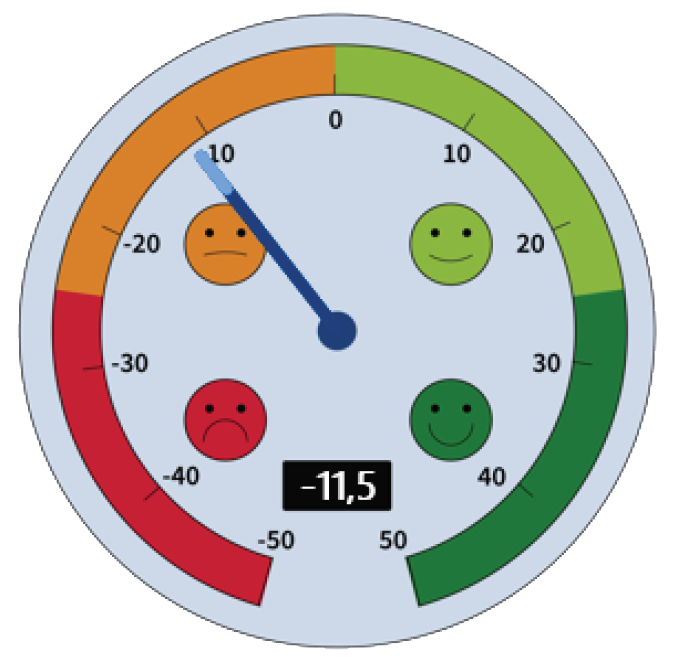
This has also worsened the Energy Transition Barometer value, which reflects the impact of the energy transition on business competitiveness: the score, which had slightly improved from a 2023 low, has now dropped to -11.48 on a scale from -100 ("very negative") to +100 ("very positive").
Industry and Trade Are Particularly Critical
Trade and industry express particularly negative sentiments, with barometer values of -22 each. Industrial enterprises, given their high energy dependence, are directly impacted by energy policy frameworks. In trade, high energy prices inflate material, transportation, and logistics costs, weakening demand amidst falling consumer purchasing power. At the same time, industrial policy relief measures scarcely benefit trade.
Northern Trends Are More Positive
Regional assessments are increasingly varied. In Northern Germany, where renewable energy has become an important economic driver, companies see predominantly positive impacts on their competitiveness from the energy transition—though challenges persist. However, the West, South, and East record poorer assessments than in the previous year.
Investments Suffer
What is concerning is that businesses are increasingly depleting their capital due to energy prices: about a third are delaying core-process investments as high energy costs constrain financial resources. This affects around a quarter of investments in climate protection measures and 16% of those in research and innovation.
The impact is particularly noticeable in industry, where investment restraint spans all areas more significantly than in the broader economy. About 35% of industrial firms report postponing core-process investments due to energy costs.
Competitiveness Declines as Production Relocates
Beyond prospective challenges from investment hurdles, high energy prices directly impair business competitiveness: Over 40% in the overall economy and around two-thirds in industry cited this. The slight decrease in industry figures may reflect firms reducing production, relocating parts of their value chains, or ceasing operations in Germany altogether.
The trend of scaling back activities continues: about 20% of companies are considering moving investments or production capacities abroad, have taken steps, or are in the process. Among industrial firms, the figure rises to 40%, and with large firms to 60%.
Conditions for energy-intensive businesses have deteriorated with high energy costs, uncertain frameworks, and significant transformation costs hindering domestic investment. The high risk of creeping deindustrialisation is evident, underscoring the challenge of balancing transformation goals with internationally competitive conditions to retain investment and value creation in Germany.
Measures
Company feedback on current policy initiatives indicates support for measures that bolster supply security, infrastructure, technological openness, and competitive energy costs while rejecting policies entailing additional regulatory or financial burdens.
Notable positive responses were towards efforts to strengthen energy infrastructure, reduce taxes and tariffs on electricity, and improve government reliability in infrastructure projects. Businesses were particularly critical of expanding emissions trading involving higher carbon prices.
Download
Complete survey results are available here:- Publication
-
Energiewende-Barometer 2026
- Summary
- Das 15. Energiewende-Barometer 2026 wirft ein Schlaglicht auf die Umsetzung von Energiewende und Klimaschutz in den Betrieben. An der Umfrage haben vom 8. bis zum 29. Juni 2026 rund 3.100 Unternehmen teilgenommen.
- Information
-
File format: PDF (accessible)
File size: 1 MB
Status of: July 2026
Page count: 11 pages
- Relevant in topic:
- Energy and climate policy
- Key areas:
-
- Climate
It has been translated with the assistance of AI.
No guarantee is made as to the accuracy or completeness of the translation.
Released 27.07.2026
Contact

Dr. Ulrike Beland
Director Economic Aspects of Climate and Energy policy