

The German Chamber of Commerce and Industry (Industrie- und Handelskammer, or IHK) highlights the importance of tax policies to boost Germany's competitiveness amidst global industrial nations.
Corporate tax burdens are one of the crucial economic factors influencing Germany's export-oriented economy. Local companies face significantly higher taxes compared to competitors in similar industrial countries. In many EU nations, both nominal tax rates and effective economic burdens are lower than in Germany. Germany, with its substantial export quota, competes uniquely among industrial nations. The high prosperity in this country largely relies on international integration of the German economy (see chapter "Foreign Trade").
Competitive tax conditions ensure stable economic growth, employment, and prosperity. Both national policies and international regulations shape these conditions. Concerning corporate income taxes, rules increasingly stem from the EU in Brussels and the OECD in Paris. Now, the complexity of tax procedures and the associated burdens for taxpayers and tax administrations play vital roles. Therefore, taxation processes should be consistently simplified and digitized promptly.
The following guidelines should define economic policymaking
In Germany, the tax burden for companies comes from income tax for partnerships and corporate tax (including trade tax) for corporations. Currently, this amounts to over 30 percent in Germany, compared to an EU average of 21.1 percent and an OECD average of 23.6 percent. Reducing this to a target rate of around 25 percent could significantly boost private investments, positively impacting economic growth and employment. Nominal tax burden is a decisive factor in investment decisions, particularly when other location factors are equal or better than Germany's. An immediate step would be abolishing the solidarity surcharge, which is now predominantly paid by businesses.
Trade tax is a peculiarity of Germany's corporate tax system. Internationally, trade tax stands out as an anomaly. This municipal-level income tax imposes additional bureaucracy on businesses due to variations in the tax base and affects the substance of businesses through trade-tax additions as cost taxation.
Trade tax should be replaced by a municipal corporate tax with a right for municipalities to set multiplier rates. The tax base should align with that of income and corporate tax. For many partnerships, it's important that income tax rates adjust regularly—preferably automatically—to inflation. This ensures businesses are taxed based on performance and don't face higher rates solely due to inflation-driven higher revenues (offsetting "cold progression").
The tax system can serve as a crucial tool to sustainably bolster company investments and improve corporate resilience. Specifically, tax depreciation should occur substantially faster on a permanent basis. Tax depreciation has the greatest positive effect on investments, growth, and employment. Medium-term measures of this kind even lead to increasing state revenues (see also ifo-Schnelldienst 10/2021).
Companies should be able to fully claim their losses. Offsetting losses against profits from at least the three preceding years should generally be possible. This creates liquidity and specifically aids companies experiencing temporary economic downturns. The same applies to loss carryforwards, which should be fully offsettable against future gains. Currently, only 70 percent of the loss amount exceeding one million euros can be offset. From 2028, the "old" limit of merely 60 percent is set to reapply. Ultimately, this is about taxing companies based solely on their financial capacity; this includes all generated profits and all incurred losses.
Tax law should also reflect the historically low interest rates. Therefore, provisions should be discounted at a realistic interest rate, not at the current rates of 5.5 or even 6 percent. This adjustment would prevent pension provisions from being undervalued for tax purposes, ensuring companies retain much-needed liquidity. Additionally, late payment and refund interest rates should be treated equally within tax law – at present, late payment interest is non-deductible, whereas refund interest is taxable.
The level of tax burden should not depend on a company’s legal structure. Consequently, choosing a specific legal form (e.g., partnership or corporation) should not be influenced by varying tax burdens tied to legal structures. The corporate tax option, introduced in 2021 for partnerships, should be simplified to better achieve this aim. Additionally, the process for the tax-favourable treatment of retained earnings should be streamlined. This would encourage more, particularly smaller, partnerships to utilise this option. For conversions, book value transfers should be the standard to preserve liquidity. Currently, silent reserves must generally be disclosed and taxed; book value transfers are only available upon request, which protects liquidity.
Tax laws should not hinder cross-border business activities. Unfortunately, current practices reveal a different reality. German tax law contains numerous provisions, such as the interest barrier, exit taxation, or controlled foreign company taxation, which impose considerable burdens on companies. These often impractical regulations frequently lead to excessive tax liabilities. Furthermore, documentation and reporting requirements for companies obstruct international business activities.
For this reason, the network of German double taxation agreements should be expanded and modernised to effectively prevent double taxation. Internationally operating companies particularly rely on legal and planning certainty as they deal with varying tax systems. This certainty could be practically improved through international tax procedures and timely, coordinated audits; ideally, tax regulations should be harmonised across borders. Germany should also actively engage on an international level in creating globally consistent tax regulations and take the lead in current developments – such as in the area of remote work.
In setting important standards by international organisations like the OECD or initiatives like the Inclusive Framework, in which over 140 nations coordinate their actions, practical and low-bureaucracy rules should be developed. The initiated reform of international corporate taxation does not (yet) meet these requirements. It comprises two pillars. While the approach might still be considered understandable, its practical applicability remains to be proven. Significant burdens are emerging in affected companies due to calculations for minimum taxation, as they must establish the necessary structures to meet these additional requirements. Fundamentally, international and EU regulations should be implemented in national law with a measured approach regarding potential burdens for affected companies. Of particular importance are the extensive requirements for companies to document transfer pricing. These regulations should be simplified as much as possible and incorporated into German corporate tax law in a tiered manner.
Tax laws and procedures should be simplified, reporting and documentation obligations reduced, and procedural requirements designed to minimise bureaucracy. Once simplified, procedures should be digitised in a manner that enables small businesses to complete them with minimal manual efforts. AI-driven automation should alleviate burdens on both administration and businesses.
Particularly, tax audits should be completed in a timely manner, achievable through a stronger focus on internal control systems (known as tax compliance systems) and high-risk issues. Binding decisions from tax authorities should be provided within six months, or ideally, even within three months, without any charges. Tax authorities and businesses should foster cooperative processes to alleviate burdens and ensure quicker legal certainty. This requires greater trust between tax authorities and businesses. The principle of "cooperation instead of confrontation" is the right approach. Within this framework, the so-called "E-Balance Sheet" should not be expanded with additional mandatory fields. Furthermore, existing retention, limitation, and prosecution periods should be shortened coherently to enhance legal and planning certainty for businesses.
The rules surrounding VAT should be simplified, made more legally secure, and implemented as automatically as possible. The current, complex regulations generate high compliance costs for companies. Daily transactions do not allow for detailed individual case assessments. The system would be simpler, for example, if the scope of reduced tax rates were curtailed. This would avoid challenging distinctions and the resulting tax risks for companies. To ensure the overall VAT burden does not increase, the standard tax rate should be correspondingly reduced. A small number of companies advocate for extending the reduced tax rate within the EU for competitive reasons.
Many reporting obligations would disappear if the small business regulation were raised to an annual turnover of €35,000, for example. Since this regulation does not show VAT on invoices and does not allow input tax deduction, fraud potential would not increase.
The import VAT should be offset against input tax immediately (offsetting model) to maintain liquidity within companies and reduce administrative burdens. This would also eliminate existing competitive disadvantages for companies importing into Germany compared to other EU states.
A practical application procedure should be introduced for VAT groups to improve legal certainty for businesses. The introduction of electronic invoicing should be implemented with caution to avoid disproportionately burdening companies. Before rolling out the digital reporting system based on electronic invoicing, its technical feasibility should be adequately tested in practice by companies.
Thresholds and definitions in various tax areas should be aligned. Due to the differing requirements in wage tax, VAT, and social security branches, companies face complex auditing processes to ensure timely and accurate submission of tax reports and declarations. Simplifications in tax and social security law could also dismantle bureaucratic hurdles and thereby enable more consistent digitalization.
Tax and contribution law should be adapted to the demands of today's work environment. Especially with changes prompted by the Corona pandemic, the working world has become more flexible, particularly concerning the choice of work location. This can affect the tax obligations of employers and employees. Remote teleworkers can face double taxation of their income. On a European or international level, there is currently a risk that teleworkers—regarding the taxation of business profits—could unintentionally create a permanent establishment for a company in another country. As a result, business profits would need to be divided between two or more locations, creating additional reporting obligations for companies.
Member states should only tax employees if the number of working days per calendar year in the country exceeds a certain threshold. Like VAT, a "one-stop shop" should be established for employers of cross-border teleworkers to report the number of working days in their home country and the company's country of seat.
The proposals presented by the European Commission in September 2023 for corporate taxation in the 21st century ("Business in Europe: Framework for Income Taxation" – BEFIT) envisage that companies operating across Europe fulfil their tax obligations through just one single entity instead of submitting tax returns separately in each member state. With proper implementation, this approach could simplify the determination of a group's tax payments significantly. The same cross-border transactions would no longer be reviewed by different tax administrations. The implementation of the proposal is being blocked by individual member states, as there has yet to be an agreement on a formula for allocating corporate profits to multiple participating states.
The corporate tax system of the head office (Head Office Tax System – HOT), introduced by the European Commission, is designed as an option for SMEs represented only by branches in other EU countries and generating less than 750 million euros in annual revenue. HOT could ensure that the tax result of the entire corporate group is calculated according to the rules applicable at the headquarters' location and distributed from there. This method could significantly reduce tax compliance costs for SMEs and stimulate their cross-border activities.
Through improved cooperation among the tax administrations of EU member states, companies could be relieved of reporting and compliance obligations in the taxation sector. Data collected by one administration should be shared directly, without requiring further involvement from businesses. Mutual exchange of tax-related information has already become a reality. Various standardised contact points (so-called 'one-stop shops') are being proposed, covering both direct and indirect taxes. Existing procedural regulations should also be reviewed regularly at the EU level. The evaluation of the EU Administrative Assistance Directives (DAC 1 to 6) provides an excellent opportunity for this.
Sustainable fiscal and tax policies rely on long-term growth. Taxation that weakens corporate substance—such as the reintroduction of a wealth tax—is, according to the vast majority of companies, inconsistent with such policies. Higher or new taxes on the substance of companies would further limit their investment opportunities, especially given already scarce equity capital. In the long term, this would detract from the international competitiveness of domestic companies and make safeguarding jobs more challenging.
The inheritance and gift tax was reformed about a decade ago. Essentially, it rightly continues to allow the transfer of operationally necessary assets free of tax. However, this exemption is tied to conditions that many family businesses find difficult to meet—such as maintaining payrolls over an extended period. Additionally, significant tightening measures were introduced. Extensive forms of "administrative assets" were defined, which are unequivocally subject to inheritance tax. During the reform, lawmakers also introduced various measures to prevent tax evasion. These measures, however, created inconsistencies and legal uncertainties that lawmakers should address. Contradictions frequently arise in the law, most recently concerning the definition of administrative assets for third-party operated properties and the so-called "90 percent entry test," which inexplicably grants benefits to one business but not another, depending on the receivables balance on the valuation date. Consequently, successors—the law's daily users—face numerous issues in classification and interpretation.
The same applies to the real estate transfer tax, which should not impede the transfer or restructuring of companies. The short-term "repairs" necessitated by the introduction of the Act to Modernise Corporate Law (MoPeG) demonstrate the need to comprehensively review the real estate transfer tax legislation. Any future reforms should refocus this tax on its foundational purpose: the change of ownership in real estate.
- Relevant in topic:
- Economic and Fiscal Policy
- Key areas:
-
- Taxes
It has been translated with the assistance of AI.
No guarantee is made as to the accuracy or completeness of the translation.
Released 13.11.2024
Modified 12.06.2026
Contact
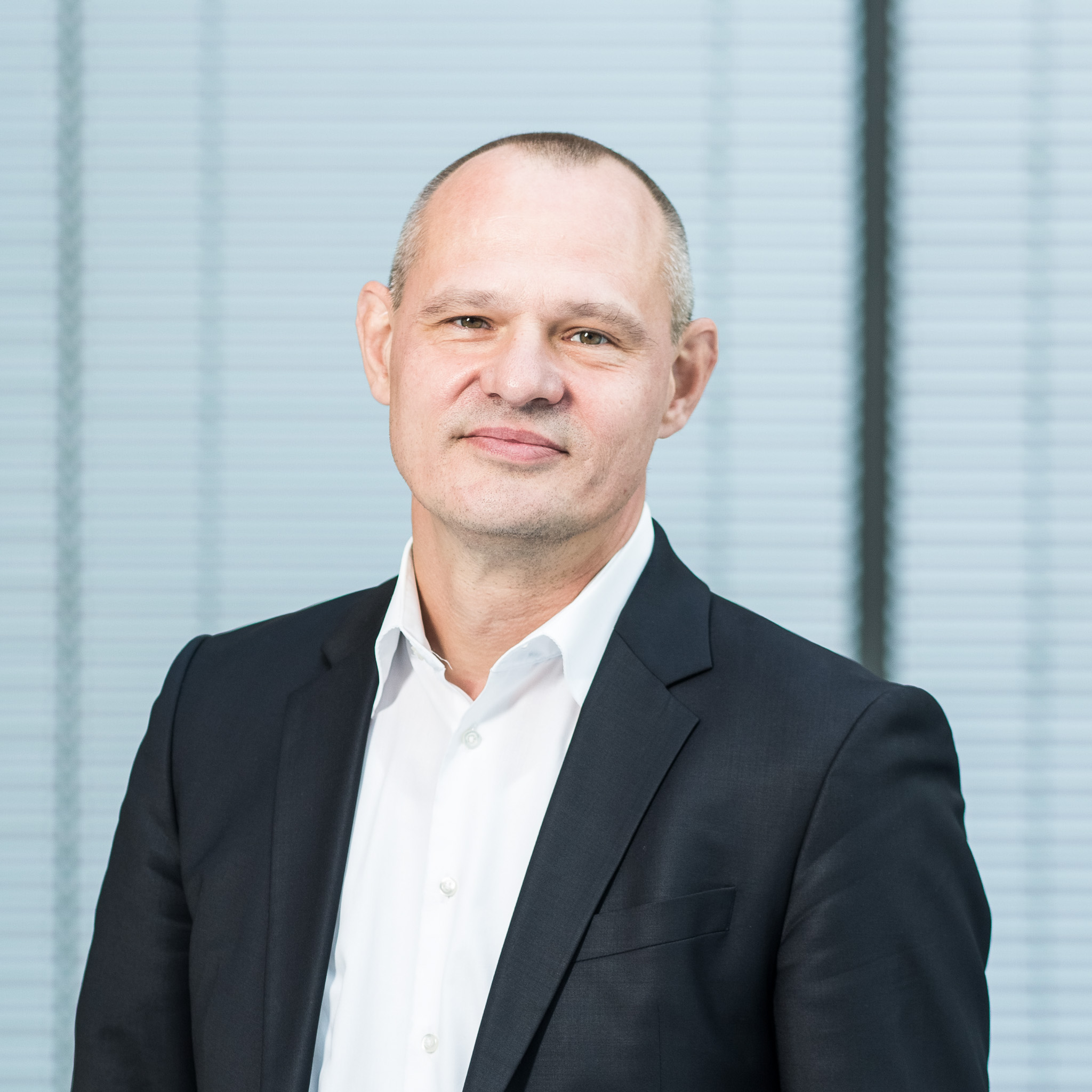
Jens Gewinnus
Director Corporate, Trade, and Income Tax
- gewinnus.jens@dihk.de
- Telephone
- +49 30 20308 2602