


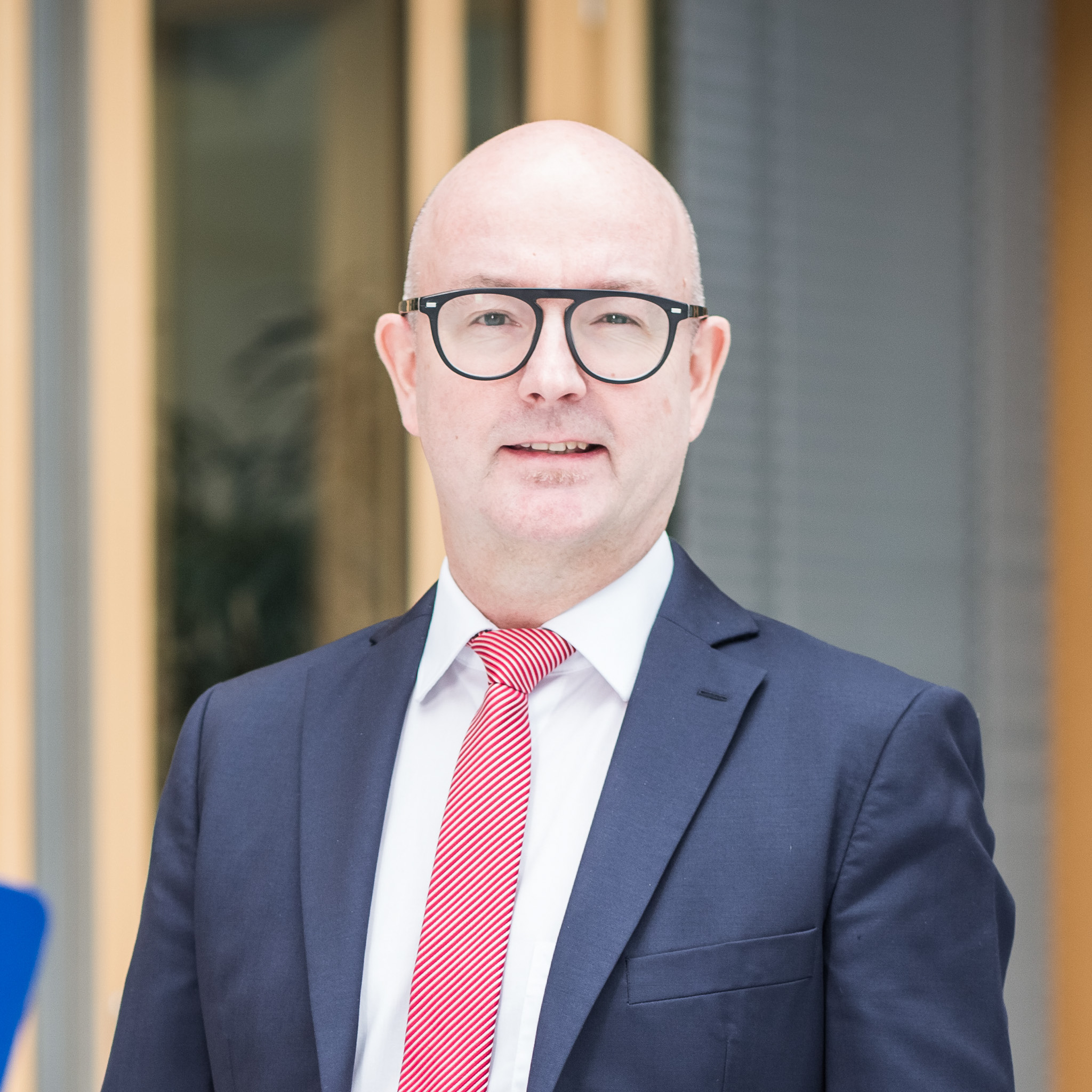
Volker Treier am Geländer 2022
Volker Treier
To roll out the "red carpet" for entrepreneurs from home and abroad, the Federal Government invited participants to the Investment Summit in the capital on October 19 and 20. According to DIHK chief analyst Volker Treier, it is a sensible move, but one that alone cannot remedy the investment weakness in Germany. Talking to the news agency dpa, Treier explained the role that such formats can play, why investments are so important now, and what needs to happen to make Germany an attractive business location that attracts fresh capital.
What is the significance of the Investment Summit?
The Investment Summit is an important signal: Germany is actively courting international capital by bringing together politicians, businesses, and investors to discuss opportunities. However, it is crucial that the format leads to actual and additional investments. A summit can build trust, but investments will only happen where everyday business conditions are convincing. To this end, the Federal Government must permanently improve Germany's business environment.
Why are investments in Germany so critical?
Investments are the prerequisite for maintaining Germany's competitiveness and ability to act in the future. There are immense challenges ahead of us: demographic change, digitalisation, and artificial intelligence, modernising our transport and energy infrastructure, and strengthening the resilience and security of our economy. All this requires investments not just in machinery and equipment but also in technologies and innovation capabilities. Those who fail to invest today will be left behind tomorrow, risking prosperity and economic independence.
What is the state of investments, and how are investors holding back?
Investment activity in Germany remains significantly weak. In the first half of 2026, private investments were still about 11% below pre-Corona levels. Results from the DIHK economic surveys also show that many companies are hesitant to invest. Uncertain economic policy frameworks, rising costs, and high bureaucratic burdens reduce Germany’s attractiveness as a business location. Investments require above all trust.
Therefore, companies need more predictability and reliability in economic policies: clear priorities, stable frameworks, and reforms that are noticeably felt in everyday business operations. Only when companies can again expect investments in Germany to be worthwhile in the long term will they abandon their hesitation.
How can Germany attract more investors, and in which areas are investments particularly welcome?
Germany can attract more investors by making its location advantages more attractive. These include faster planning and approval procedures, less bureaucracy, lower energy and labour costs, modern infrastructure, and an internationally competitive tax and regulatory system. Investments are broadly welcomed across the economy. However, they are particularly promising where they strengthen growth, productivity, and technological sovereignty: in digitalisation, future technologies such as artificial intelligence or semiconductors, energy and data networks, modern transport infrastructure, climate-friendly technologies, research and development, as well as in security-relevant and strategic industries. It is crucial that the state does not dictate individual business models but creates reliable conditions under which private investments in Germany are worthwhile again.
To what extent are German companies increasingly investing abroad?
German companies are increasingly investing abroad because the business conditions there are more attractive. According to the DIHK economic survey at the beginning of the year, 41% of industrial companies investing abroad cite cost savings as their main driving force—the highest figure since 2003. At the same time, the DIHK Energy Transition Barometer indicates that around 40% of industrial companies are considering reducing production in Germany or relocating it abroad due to high energy costs. This is a clear mandate for Germany as a business location to reduce the cost burden.
- Relevant in topic:
- Economic and Fiscal Policy
- Key areas:
-
- Reducing Bureaucracy
- Financing
It has been translated with the assistance of AI.
No guarantee is made as to the accuracy or completeness of the translation.
Released 20.10.2026
Contact
Sven Ehling
Spokesperson | Visual Communication