

The online survey, in which around 14,000 companies participated, presents a nuanced picture. On one hand, economic uncertainty, competency gaps among school leavers, and a lack of affordable housing hinder apprenticeship activities, while the job market craves skilled workers. On the other hand, the survey highlights that businesses remain committed to dual vocational training and overwhelmingly retain their graduates as employees.
Pressure on Apprenticeship Supply
The German Chamber of Commerce and Industry’s (DIHK) Vocational Training Survey 2026 reveals that IHK training companies, in the face of stiff economic headwinds, are more often reducing their apprenticeship positions compared to last year than expanding them. Six years of stagnant economic growth and the shortage of suitable applicants are taking their toll: 29 percent of companies are offering fewer apprenticeship positions, while only 13 percent are able to expand their offerings.
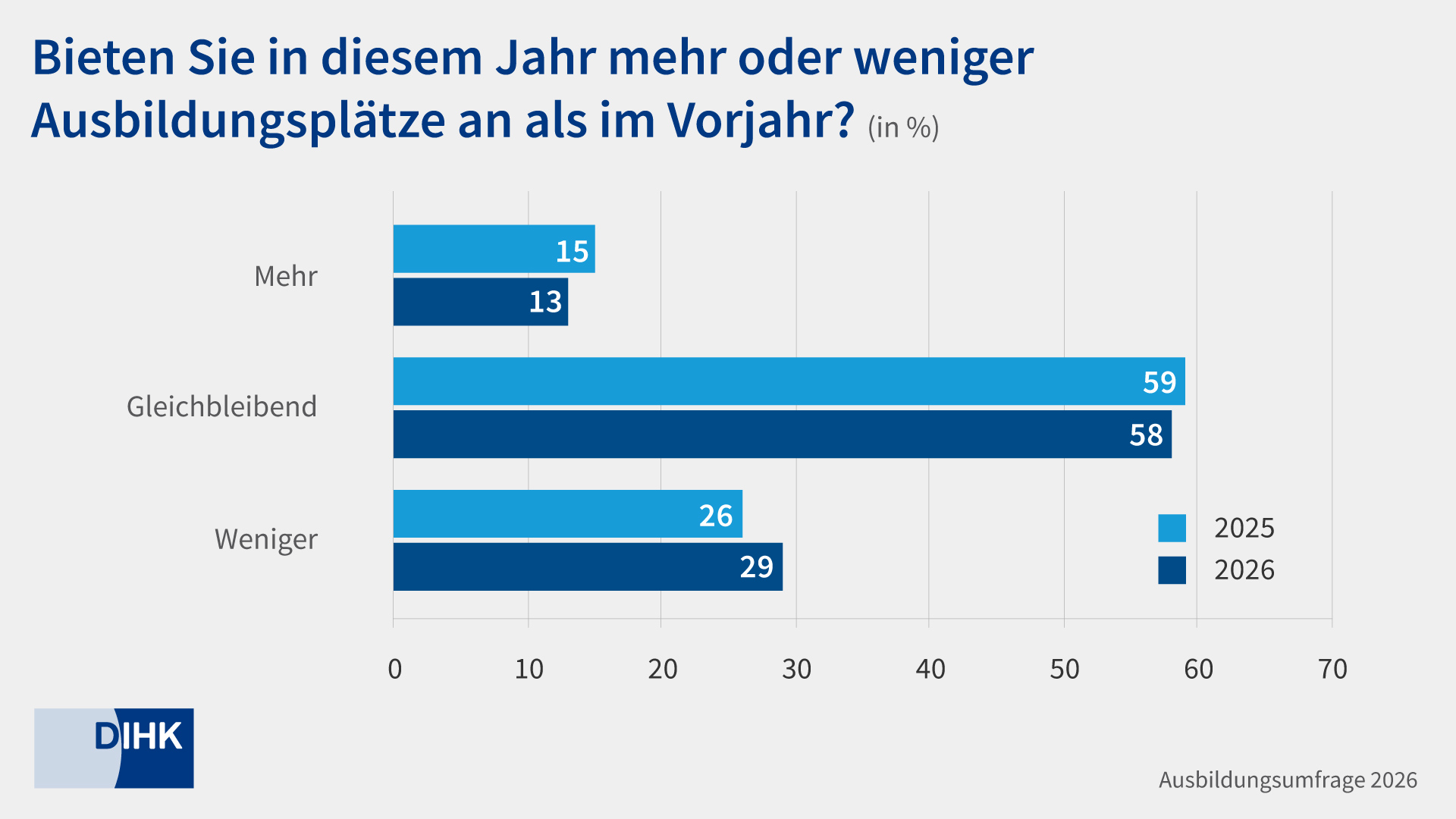
Companies’ expectations regarding their economic development significantly influence their apprenticeship supply. Approximately four in ten companies with negative business forecasts report reducing apprenticeship offerings, compared to 26 percent with positive forecasts.
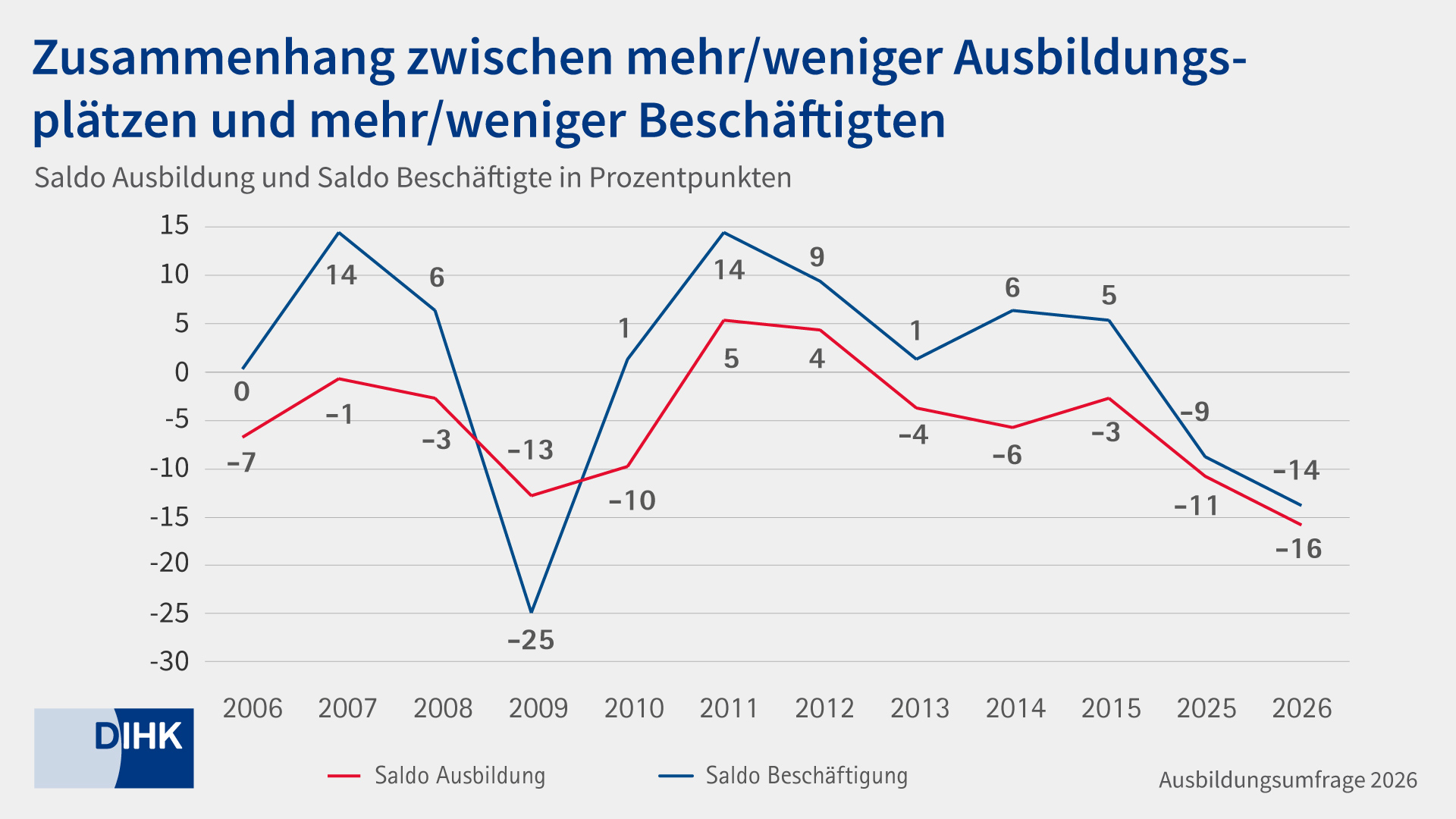
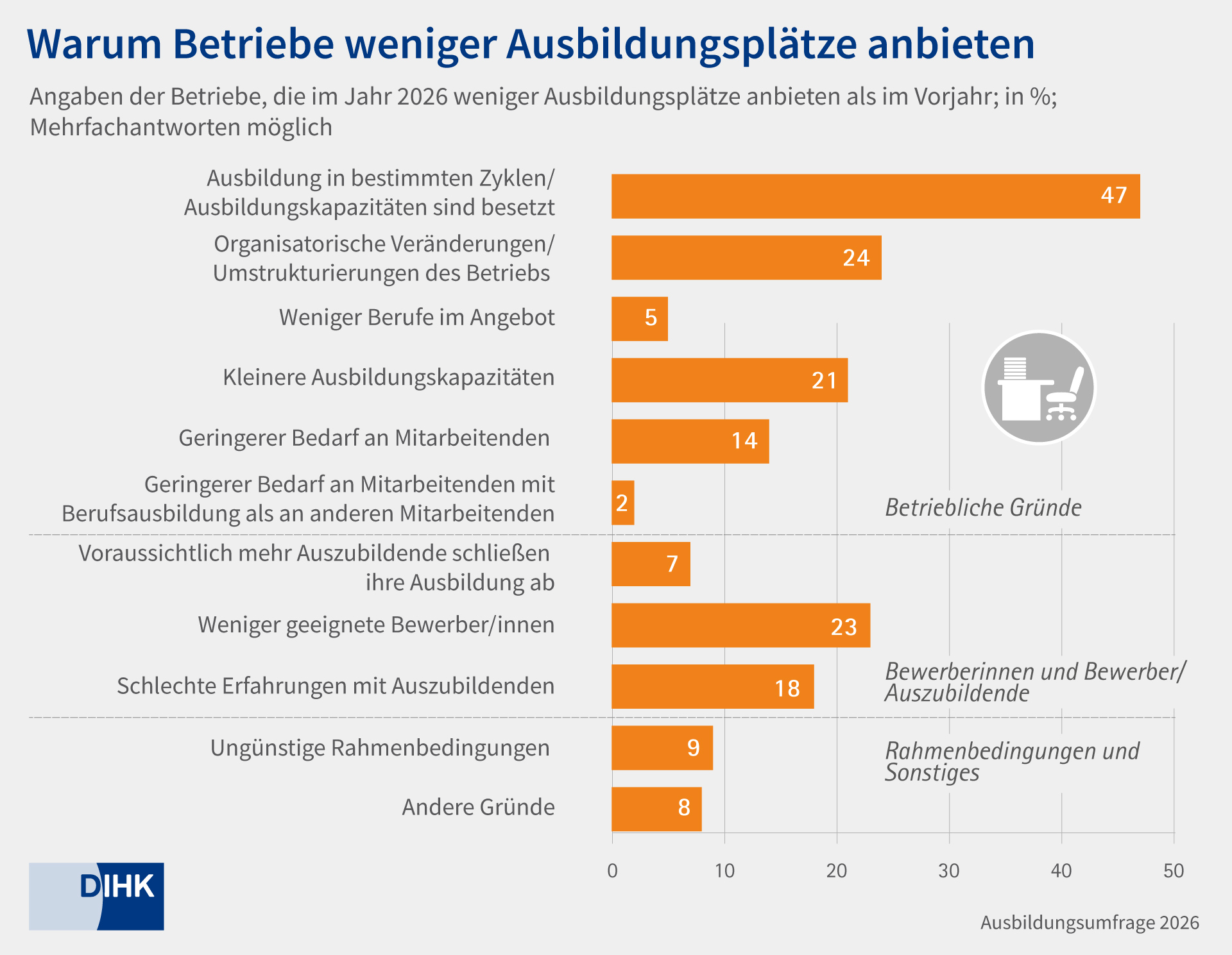
The survey results illustrate structural barriers to training, particularly a lack of core competencies among school leavers. One in four companies reducing their apprenticeship offerings cites the lack of suitable candidates as a reason. One in five refers to poor experiences with apprentices.
The lack of suitable candidates (37 percent) and poor experiences with apprentices (27 percent) are the main reasons some companies choose not to train at all.
Persistent Recruitment Challenges
Although companies tend to reduce their apprenticeship offerings, recruitment challenges remain at record levels. About half of the companies were unable to fill all their apprenticeship positions in 2025. Since 2015, the proportion of companies facing recruitment issues has risen from 31 percent to 49 percent—an increase of more than half.
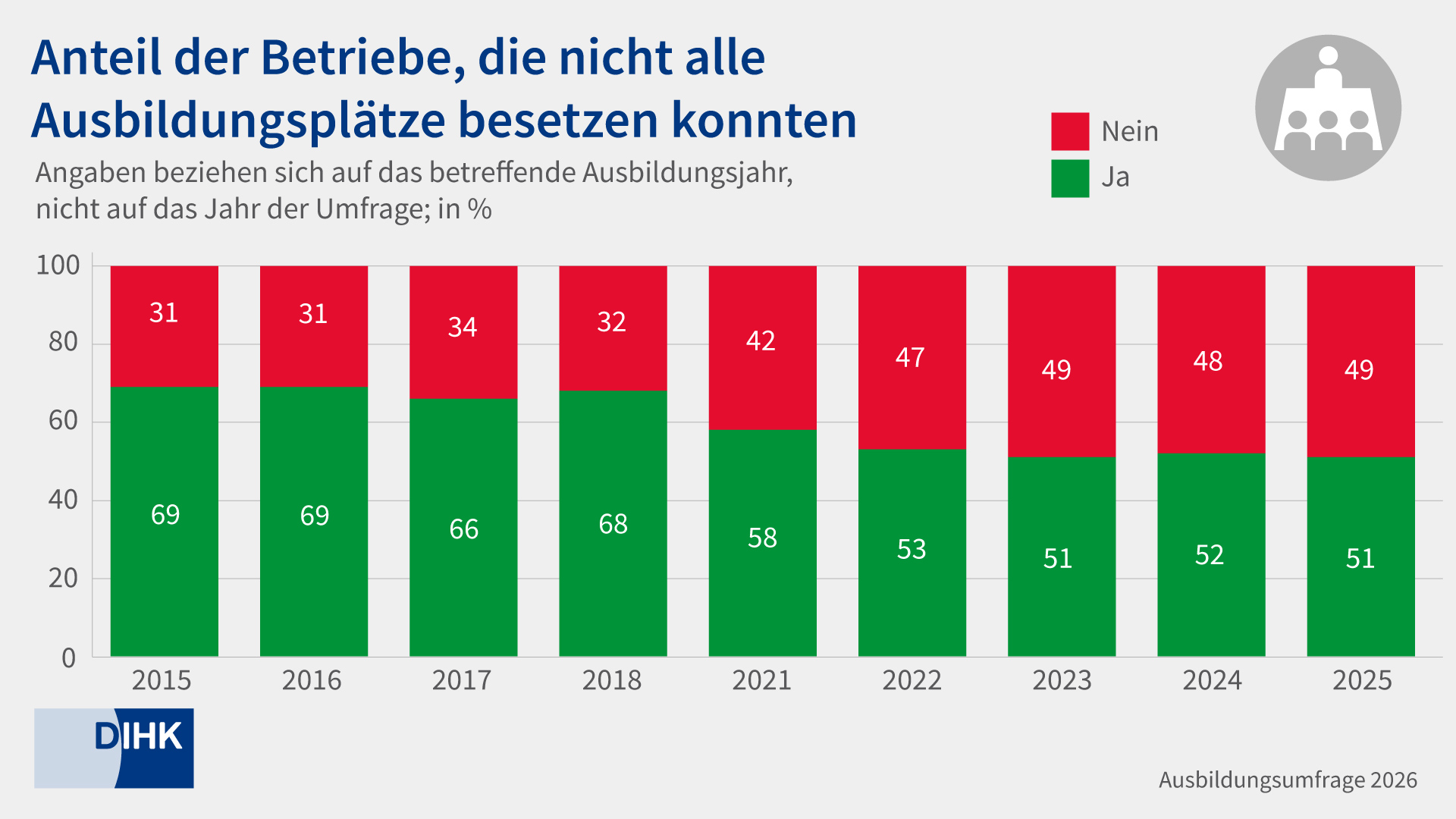
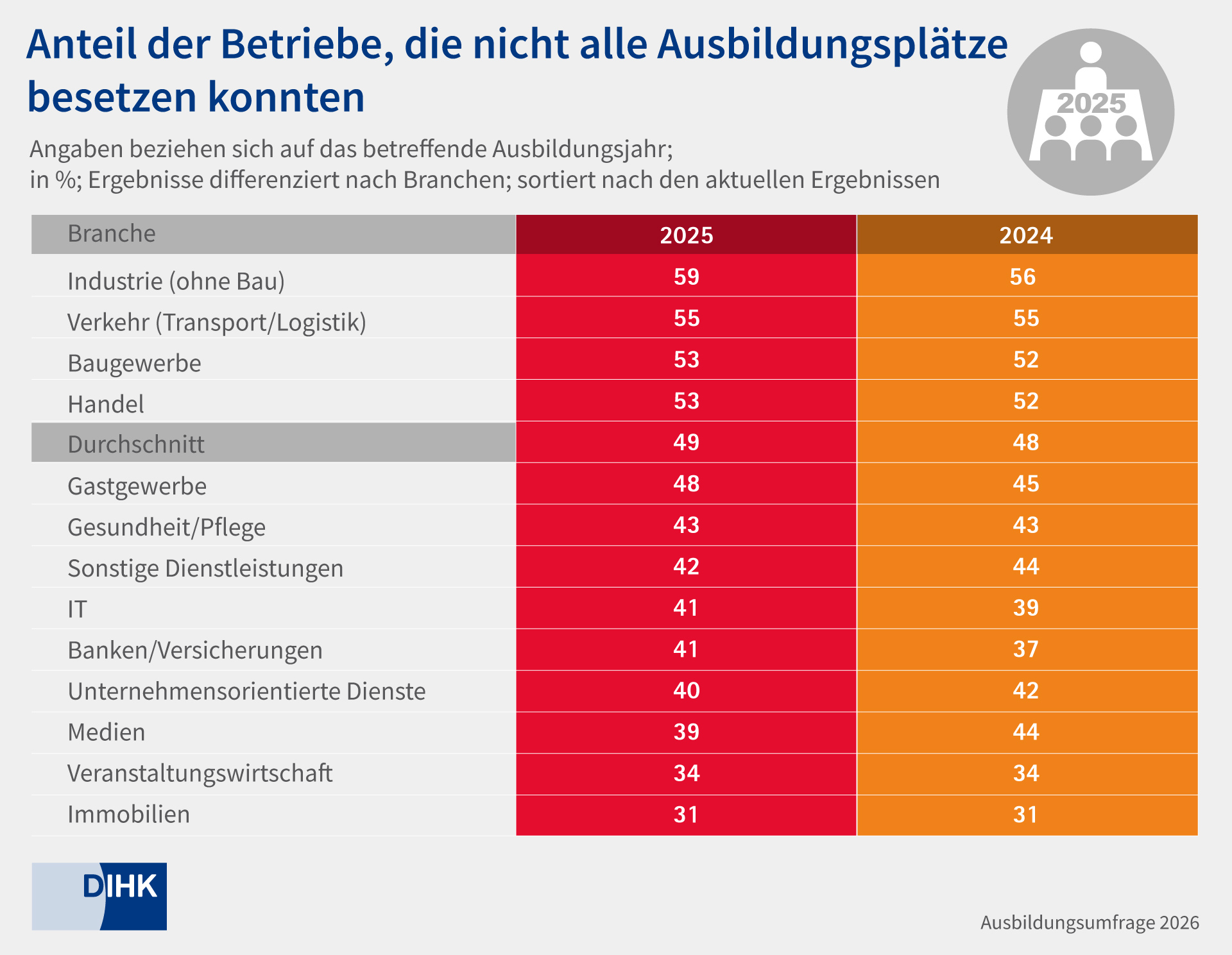
Recruitment challenges would be even greater if companies weren’t inclined to reduce their apprenticeship offerings due to various barriers. The core issue remains the mismatch (“matching”) between supply and demand—across qualifications, regions, and professions.
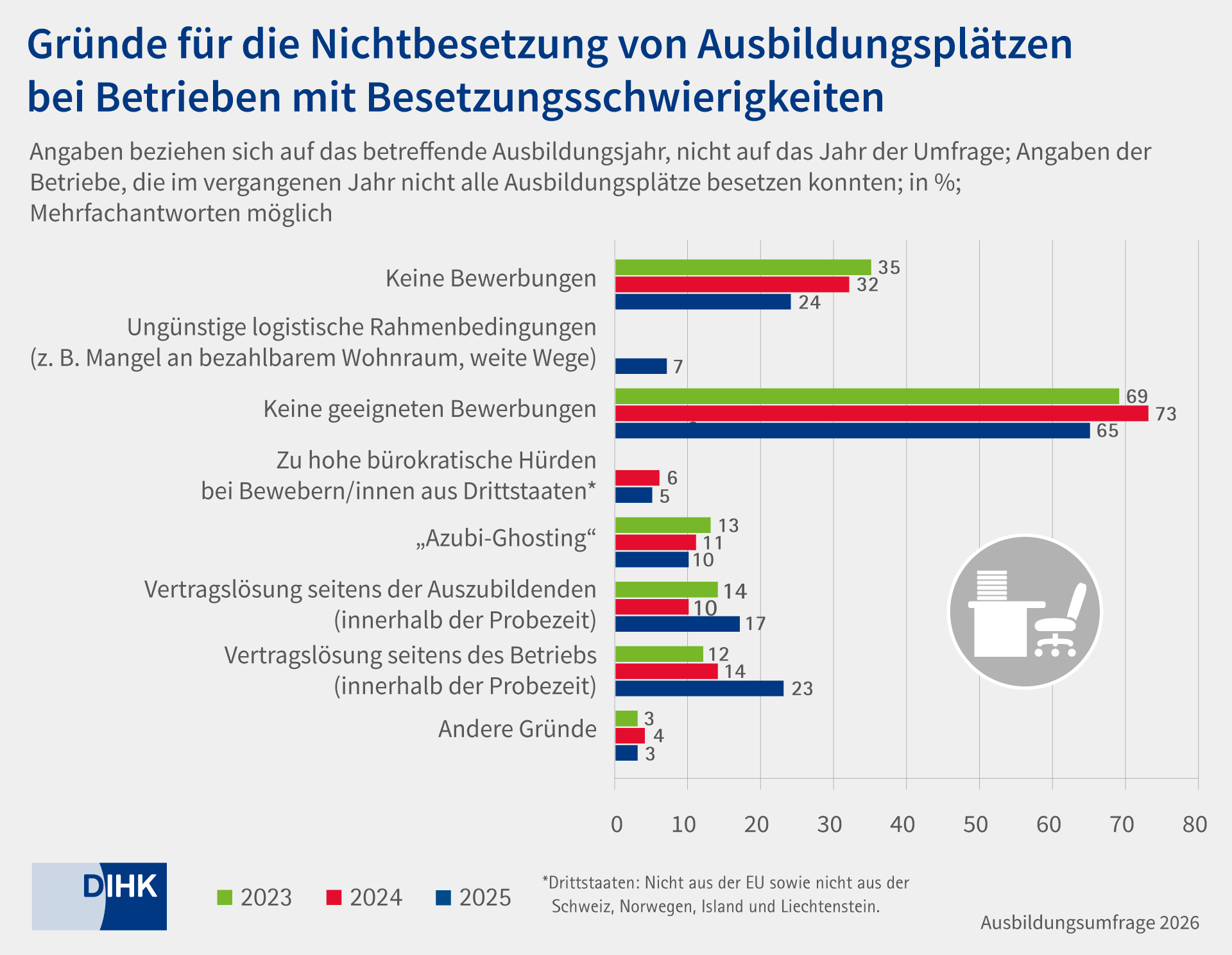
The findings highlight a clear pattern: While the shortage of applications has somewhat eased over the past four years, the shortage of suitable applications remains the most significant recruitment hurdle, cited by about two-thirds of companies facing difficulties. This indicates significant qualification mismatches, alongside an increasing trend of contract cancellations shortly after the start of apprenticeships.
Spotlight 1: Deficits in Core Competencies Hamper Training
Approximately every second company notices frequent shortcomings in job-related and social skills—particularly resilience—and cognitive competencies. Moreover, around four in ten companies often identify deficits in mathematics, basic economic knowledge, or German language skills.
A smaller proportion observes frequent gaps in natural sciences (one in four) or English (one in five). Additionally, one in four companies identifies frequent issues with career decision-making skills, indicative of vocational mismatches. Yet, three-quarters of companies that identify such gaps are open to taking on apprentices with initial challenges, offering support such as tutoring opportunities.
Spotlight 2: A Lack of Affordable Housing Weighs on Trainees
Almost two-thirds of companies see the lack of affordable housing for apprentices as a pressing issue, with a majority in all 16 federal states agreeing. Berlin and Hamburg top the list, where nine in ten companies highlight the need for action. Regarding potential solutions, four in ten companies seek better information and simplified access to financial aid for apprentices (e.g., vocational training allowance or housing benefit), as well as programmes to find housing—essentially advocating for reduced bureaucracy.
Spotlight 3: Apprentices from Non-EU Countries as an Opportunity
More than half of companies see apprentices from non-EU countries as an opportunity to secure skilled workers. About one-third have already attempted to recruit such apprentices, with nine in ten of these companies succeeding. However, these companies continue to face challenges, primarily the apprentices’ lack of German language skills at the start of training and bureaucratic hurdles. The lack of affordable housing is also a significant issue, particularly for apprentices from non-EU countries, who often lack social networks and regional housing market information.
The Majority of Companies Retain All Apprentices
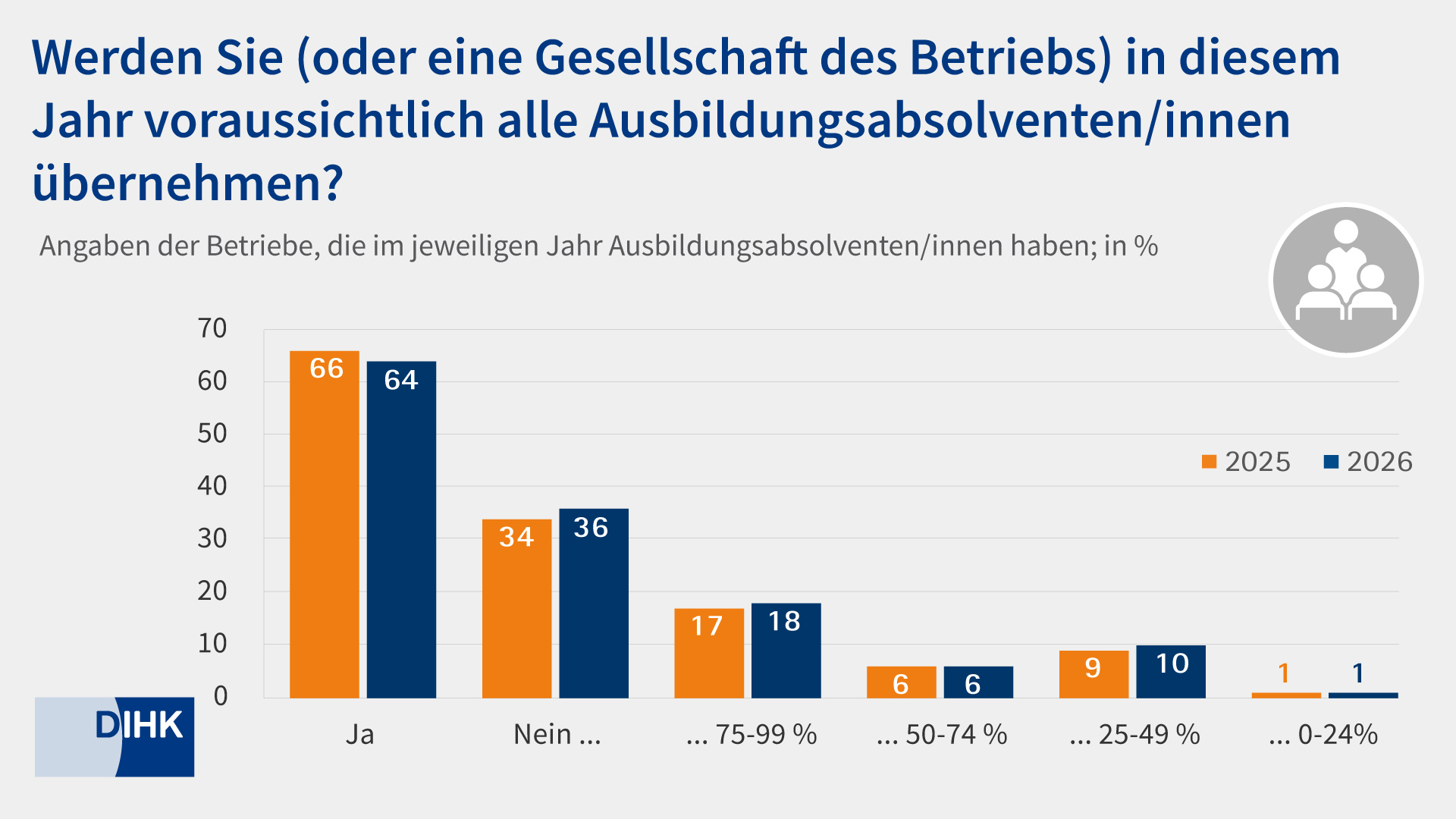
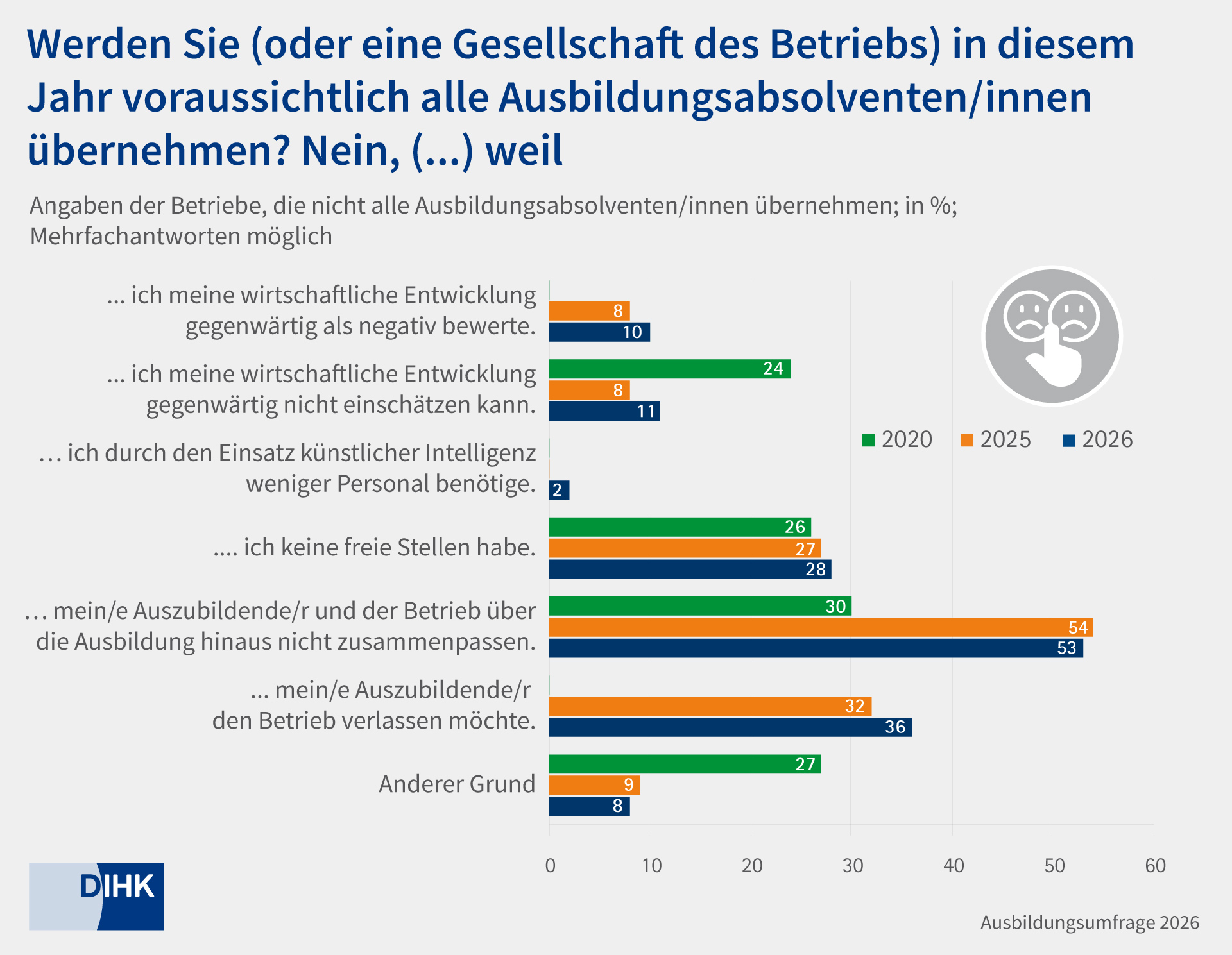
Despite economic challenges, high location costs, and geopolitical crises, four out of five companies retain at least 75 percent of their apprentices after training, with around two-thirds retaining all their apprentices. Additionally, 84 percent of companies plan to support their apprentices in future qualifications, demonstrating the strong career prospects for young people with dual vocational training.
Download (only available in German)
- Publication
-
German Chamber of Commerce and Industry Training Survey 2026
- Summary
- The German Chamber of Commerce and Industry Training Survey 2026 is based on an online survey conducted by the IHKs from 11 to 29 May 2026. Feedback was collected from 14,058 companies. It examines the provision of training places in IHK companies, the recruitment of trainees, as well as the retention and further qualifications of graduates. The survey sheds light on issues such as basic competency gaps, affordable housing for apprentices, and apprentices from third countries.
- Information
-
File format: PDF (accessible)
File size: 2 MB
Status of: August 2026
Page count: 36 pages
- Relevant in topic:
- Skilled Workforce and Education
- Key areas:
-
- Vocational Training
It has been translated with the assistance of AI.
No guarantee is made as to the accuracy or completeness of the translation.
Released 28.07.2026
Modified 03.08.2026
Ansprechpartner

Dario Portong
Director Analysis and Vocational Education Data
